


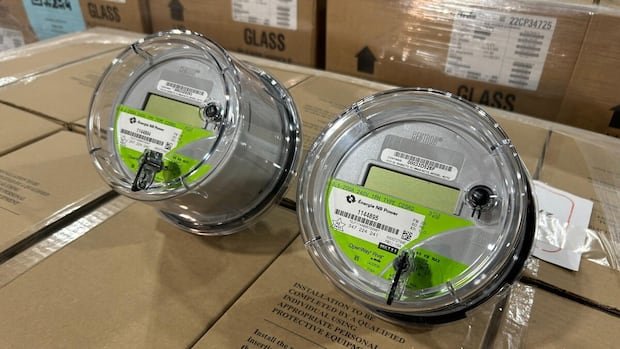

The count of households in New Brunswick rejecting the installation of N.B. Power smart meters has surged to an estimated 17,000, which is ten times higher than the previous year’s reported rejection rate. Despite this increase, N.B. Power asserts that the adjustments to how they handle customers opting out of the smart meter program, including a threefold increase in costs for retaining old meters, are not meant to penalize customers.
The utility is currently in the final phases of deploying approximately 388,000 new “communicating” smart meters across the province as part of a comprehensive initiative to modernize its electrical distribution grid. These changes will enable N.B. Power to gather individual customer consumption data electronically in real-time, as opposed to a monthly manual check by a meter reader.
Smart meters facilitate continuous communication with the power utility, allowing for immediate detection and precise localization of outages, as well as enabling customers to monitor their daily electricity usage to make adjustments and prevent high monthly bills. Moreover, these meters will eventually support pricing and service innovations, such as offering varying electricity rates based on different demand periods throughout the day.
However, smart meters have sparked controversy, with online opponents raising concerns about disputed health and safety risks, accuracy issues, and privacy violations due to the constant collection of consumption data. Among those opposed is Clarence Maillet from Moncton, who has opted out of having a smart meter installed and is displeased with the proposed special fee starting next spring to maintain his current meter.
N.B. Power, in its filing with the New Brunswick Energy and Utilities Board, proposes to manually read meters that have not been upgraded six times a year for customers who decline the new smart devices. To cover this cost, the utility intends to impose a special meter-reading levy of $4.65 per month on those who opt out, starting in April.
The revised opt-out plan deviates from the original strategy presented during the hearings approving smart meter installations in 2020. Initially, N.B. Power planned biannual manual readings for customers rejecting smart devices to minimize costs. However, the utility now believes that six annual meter readings provide enhanced service to customers, leading to a more favorable customer experience despite the increased expense.
N.B. Power emphasizes that the decision to enhance the service with more frequent meter readings was not driven by financial penalties for opting out of smart meters but rather aims to improve customer service. The change in the opt-out plan comes as N.B. Power faces greater resistance to smart meters than anticipated, with the rejection rate significantly higher than earlier estimates. Nonetheless, the utility anticipates a gradual decline in opposition as people acclimate to the technology and receive further information to address concerns.