



Researchers focused on marine life in British Columbia are suggesting that a new cooperative strategy for monitoring whale sightings, currently employed in parts of California, could also aid in reducing whale strikes in this region.
In the San Francisco Bay area, a partnership among scientists, ferry operators, and the general public is underway to keep track of whale movements utilizing a dedicated app and specialized camera technology.
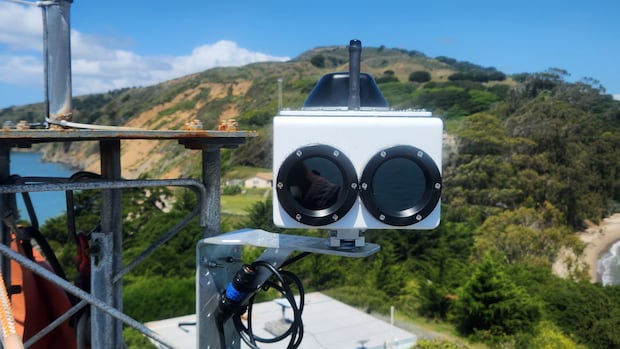
The WhaleSpotter cameras, each contained within a white box the size of a microwave, utilize thermal imaging to continuously observe whale activities, both day and night. Sightings from these cameras are documented alongside those reported by individuals in a public application.
“The more observers we have on the water, the better we can safeguard the whales,” stated Daniel Zitterbart, the lead scientist at WhaleSpotter.
Currently, the cameras have been set up on Angel Island as well as on vessels of the San Francisco Bay Ferry.
While British Columbia has installed some WhaleSpotter cameras, they are stationed on land rather than on ferries, which restricts their whale detection capabilities to approximately two nautical miles (3.7 kilometers).
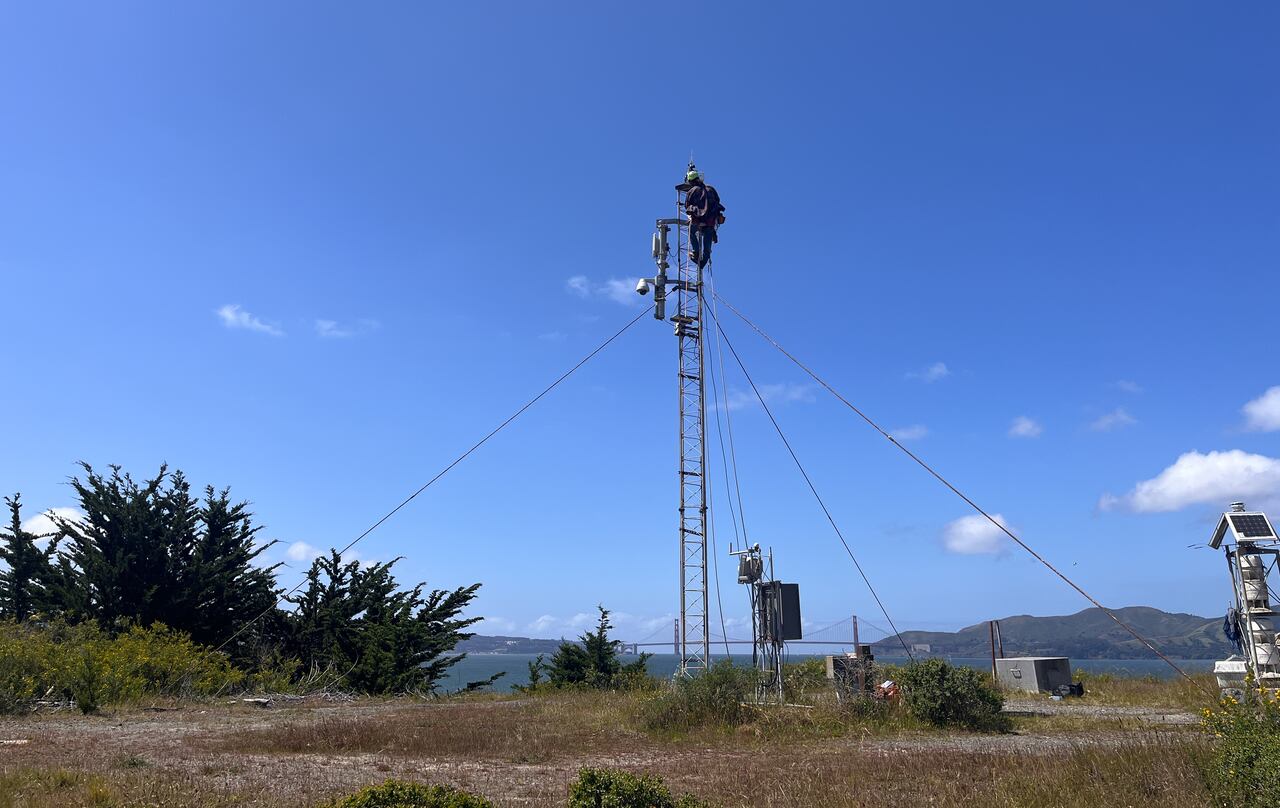
Some WhaleSpotter cameras are positioned on land, overseeing San Francisco Bay. (Benioff Ocean Science Laboratory)
Monitoring these marine mammals is crucial for understanding their migratory paths and preventing collisions with vessels, an issue that has garnered growing concern in British Columbia. The province has recorded multiple incidents of whale strikes in recent years, including the death of a humpback whale in Wright Sound, a calf that was struck by a Hullo Ferry last autumn, and an endangered orca from the J pod that was killed in 2016.
In San Francisco Bay, the cameras are linked to an application known as Whale Safe, which allows scientists, mariners, researchers, and the public to monitor whale sightings.
“This initiative represents the community collaborating to develop a public service resource,” remarked Douglas McCauley, director of the Benioff Ocean Science Laboratory.
In British Columbia, only licensed commercial mariners have access to the data collected by the cameras via the Ocean Wise whale report alert system, which notifies them if a whale is nearby, excluding public access.
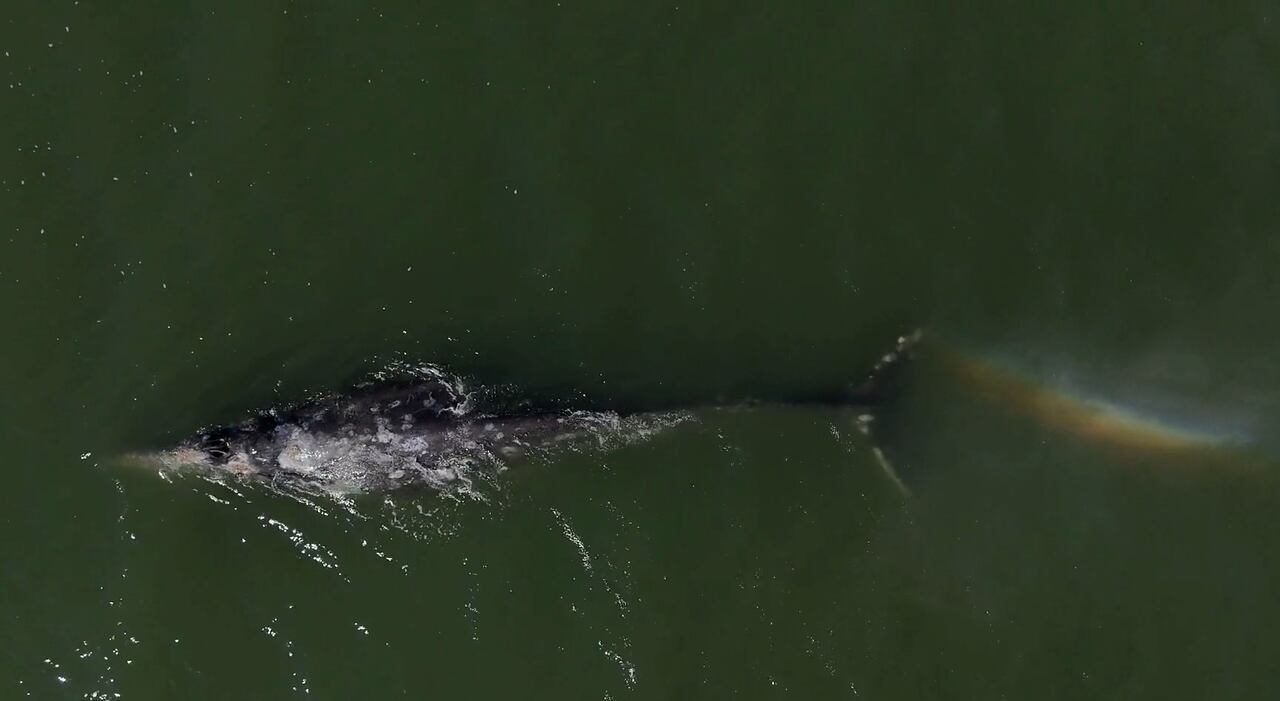
A grey whale swims close to San Francisco Bay. Douglas McCauley, director at the Benioff Ocean Science Laboratory, noted they are witnessing one of the lowest populations of grey whales in 55 years. (Gina Lonati/The Marine Mammal Center)
Thomas Hall, representative of the San Francisco Bay Ferry, stated that the ferry-mounted cameras will enable them to monitor whale behavior and patterns over time.
“We aim not only to utilize the real-time data from trips but also to establish trends regarding where whales are congregating so we can modify our routes accordingly,” he explained.
Zitterbart expressed his desire for B.C. Ferries to adopt a similar approach.
“I would be thrilled to see these cameras implemented across all B.C. Ferries routes, which traverse areas known as humpback highways,” he stated.
B.C. Ferries announced that it is considering the installation of detection devices on its northern route, where a humpback whale was tragically killed by one of its vessels last autumn, and plans to assess other routes thereafter.
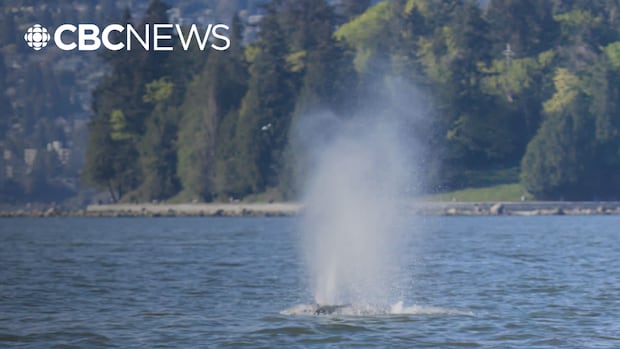
Grey whales frequently visit the waters surrounding Vancouver, generating excitement among observers. Recently, a swimmer had a particularly memorable encounter with one feeding in English Bay, as reported by CBC’s Alanna Kelly.
There have been increasing calls for enhanced collaborative conservation measures in light of rising ship traffic and climate change, which has compelled some whales to change their migration patterns.
According to McCauley, researchers in San Francisco Bay have observed a rise in grey whales as they search for new food sources on their journey back north.
The Benioff Ocean Science Laboratory reported that 21 whales perished in the bay last year, with 40 percent showing evidence of ship-related injuries.
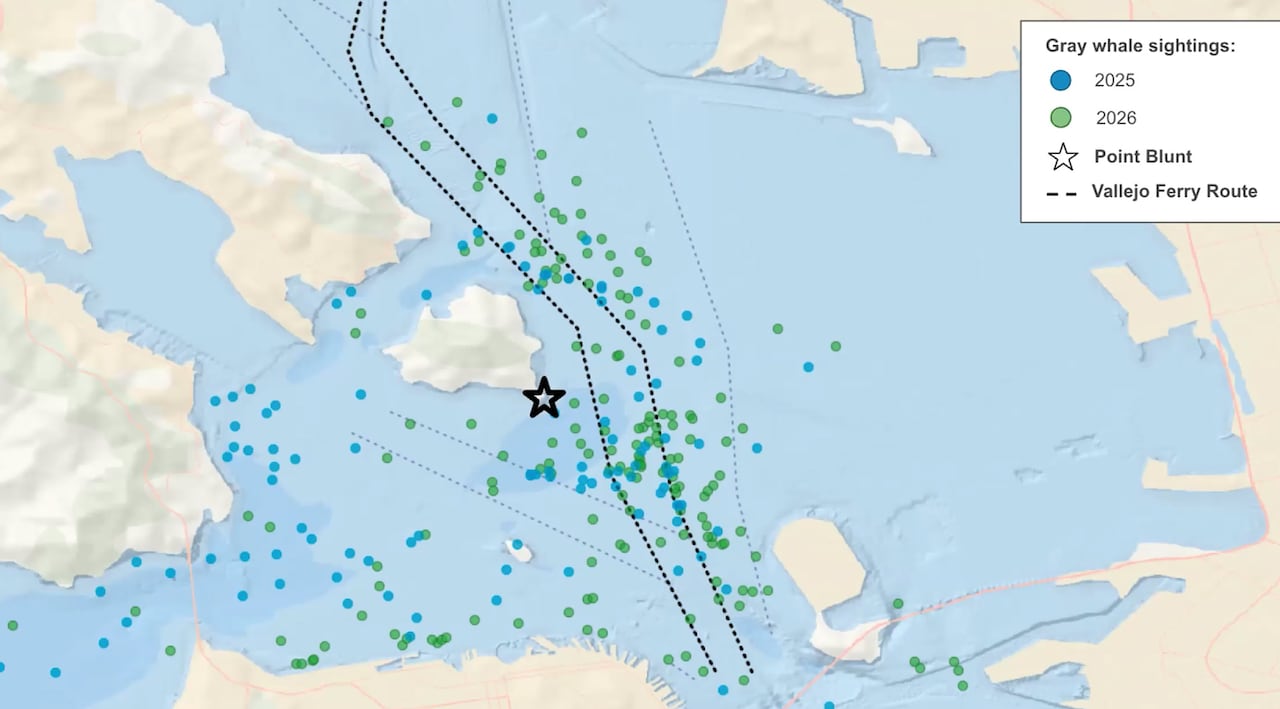
Sightings of grey whales in San Francisco Bay are documented through the Whale Safe app. (Whale Safe)
Sean Brillant, a conservation biologist at the Canadian Wildlife Federation, indicated that vessel strikes pose a significant risk to whales in Canada, emphasizing the urgency for action.
“This is not just a problem for British Columbia or the west coast of North America; it is a global issue,” he stated.
He stressed the need for cooperation among various organizations domestically and internationally to safeguard whale populations.
“The most effective conservation efforts we have observed globally involve the sharing of information across multiple agencies.”