


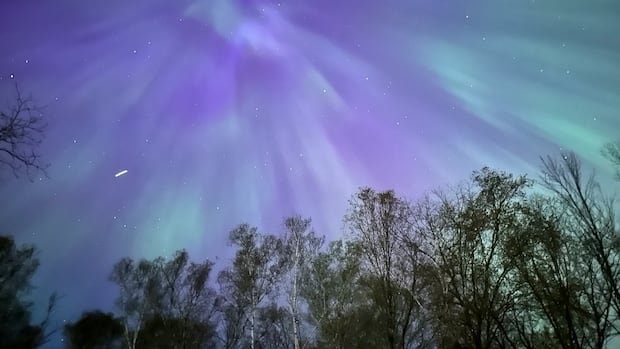

If the sky is clear tonight, consider stepping outside to witness a potential display of the northern lights. The U.S. Space Weather Prediction Center reported a significant solar event, with the sun releasing an X 1.9 flare followed by a prolonged coronal mass ejection (CME). This flare, lasting for several hours, was more intense than typical flares of similar magnitude.
CMEs are powerful solar eruptions that expel particles into space at high speeds. When these particles interact with Earth’s magnetic field, they can produce the mesmerizing phenomenon known as the aurora borealis in the northern hemisphere and aurora australis in the southern hemisphere.
Earth happened to be in the trajectory of the CME, promising a potential spectacle for aurora enthusiasts. The SWPC estimates the CME’s arrival around late January 19 EST to early January 20.
Geomagnetic storms, such as the forecasted G4 storm, can disrupt Earth’s magnetosphere. The scale ranges from G1 (minor) to G5 (extreme). Notable past storms like the G5 events in May 2024 and October 2024 led to stunning displays visible as far south as the Caribbean.
Typically, the aurora borealis is observed in northern regions, but under favorable conditions, they can be seen further south. The visibility of the aurora is influenced by factors like the southern dip of the auroral hole and nighttime darkness.
While this time of year may not be optimal due to increased cloud cover, finding a dark and cloud-free location can enhance your chances of witnessing the aurora. With the severity of the predicted storm, facing north may not be necessary, although it could aid visibility if the storm intensity is moderate.
For real-time updates on aurora visibility in your area, consider using apps like Aurora Alerts and Aurora Forecast.