



A generator hums in a grassy field at the Lake George wildfire operations site in Nova Scotia, while a team member lays out numerous hoses to dry under the sun. These hoses were recently removed from residences and infrastructure, where they supplied water to hundreds of sprinklers that sprayed water into the air, safeguarding homes from encroaching flames and embers.
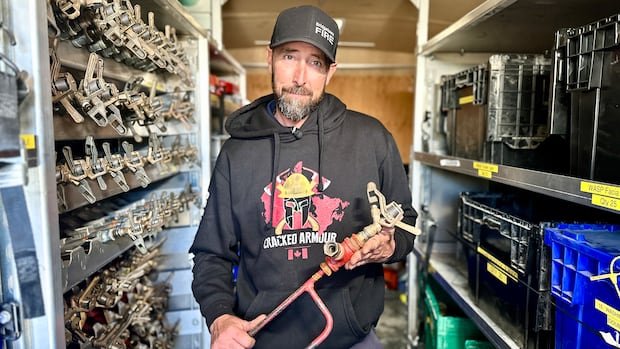
Following the successful containment of the Kings County wildfire, the equipment is being stored in trailers until it is required again. This wildfire season witnessed the largest protective operation in the province’s history for structures. The effectiveness of these measures has prompted the Department of Emergency Management to acquire more structure protection units, which are equipped with sprinklers, pumps, and hoses.
Dave Rockwood, the province’s fire and ground search and rescue coordinator, emphasized the significant investment in expanding the number of units province-wide. The utilization of sprinklers played a crucial role in preserving numerous homes and infrastructure during the Lake George and Long Lake wildfires.
In the Lake George incident, around 600 sprinklers of various types were utilized, requiring several days for setup and continuous labor over weeks to maintain operations. Nova Scotia currently possesses one structure protection unit and plans to procure additional units at a cost of $245,000 each, although the exact quantity was not disclosed.
Additionally, the province collaborates with local fire departments, such as Halifax Regional Fire and Emergency and the Brooklyn Volunteer Fire Department, who possess their own units. During the Long Lake fire in Annapolis County, 88 residences were equipped with sprinklers, resulting in the preservation of 85 homes.
Despite the loss of 20 residences, Jason Burton’s home was spared by the sprinkler system. Burton expressed deep gratitude for the protection provided by the sprinklers during the recent interview. The strategic placement of sprinklers around communities during the Lake George wildfire created a barrier of water to mitigate the fire’s impact.
Managing the sprinkler systems is a substantial undertaking. Crews have the option to draw water directly from nearby sources to feed hose lines or transport water using large portable tanks. Each portable tank holds approximately 2,500 gallons and needs constant refilling during shifts to ensure the sprinklers remain operational.
Rockwood highlighted the massive volume of water moved during the Long Lake operation, including sourcing water from smaller ponds and yards. The decision not to use sprinklers during previous wildfires in Halifax and Shelburne County was due to the fast-moving nature of the fires early in the season.
The acquisition of new structure protection units will follow the province’s standard procurement process.