


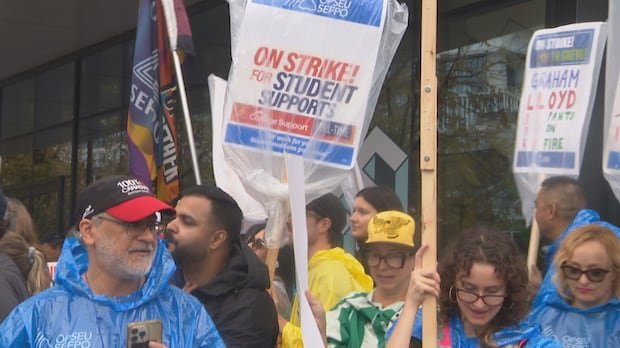

After a period exceeding one month of striking, approximately 10,000 support personnel at Ontario’s 24 public colleges have secured a tentative agreement with their employer, as announced by their union on Wednesday. The support workers, comprising roles such as librarian technicians, registrar employees, and technology support staff, initiated the strike on September 11, citing concerns related to job security and college funding.
The union, Ontario Public Service Employees Union (OPSEU), disclosed that the workers are set to resume work on Thursday. They will evaluate the specifics of the newly proposed deal and cast their votes for or against its ratification. Christine Kelsey, head of the union’s negotiation team, emphasized the necessity of the strike to combat plans for privatizing public education, as well as the looming threats of 10,000 job cuts and over 650 program eliminations within the system.
Although details of the agreement were not disclosed, Kelsey praised the members for their resilience during the negotiations, acknowledging the challenges posed by the employer. The College Employer Council (CEC) reported that a private mediation session held over the weekend successfully resolved the bargaining deadlock, paving the way for the tentative deal. The agreement must be formally approved by November 4, with the picketing activities ceasing in the interim.
CEC CEO Graham Lloyd expressed gratitude for the imminent return of the support staff, highlighting their essential contributions to college operations and student success. The negotiations between OPSEU and CEC, representing the province’s publicly funded colleges, commenced in June following the expiration of the previous contract in September, leading to the strike by the workforce alarmed by the anticipated job and program reductions.
The union’s stance was centered on advocating for job security and adequate funding for the public college sector in light of the projected mass layoffs. While the CEC previously contended that the union’s demands were financially unfeasible due to declining college enrollments and revenues, the union persisted in its pursuit of protecting jobs and preventing campus closures or staff reductions.
In a scathing critique, the union accused Premier Doug Ford’s government of neglecting Ontario’s public college system, attributing the funding deficiencies to the government’s broader privatization agenda. Kelsey emphasized that beyond securing a contract, the strike had successfully raised awareness in the public domain about the deliberate defunding of the college system under Ford’s governance.
Ultimately, the resolution of the strike signifies a significant development for the college support staff and the broader educational landscape in Ontario.