


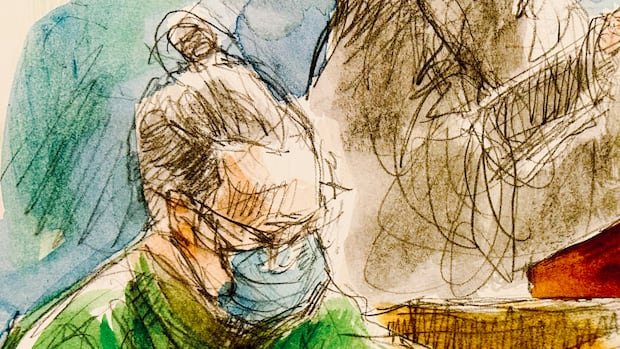

In a highly emotional trial involving allegations of child abuse and mentions of suicidal thoughts, one of the two women from Ontario facing charges in connection with a boy’s death shared her perspective for the first time. Becky Hamber, testifying in Milton Superior Court, expressed the challenges she and her wife, Brandy Cooney, encountered in attempting to provide the necessary support for the boy in their care.
Hamber revealed that they were unaware of the boy’s severe behavioral issues before he and his younger brother came to live with them. The older boy exhibited sudden violent outbursts, and when difficulties arose, the Children’s Aid Society was not consistently supportive, according to Hamber’s testimony.
In a particular incident in 2018, known as L.L. during the trial, he insulted Hamber and physically pushed her down a flight of stairs, resulting in her sustaining a leg injury. Subsequently, Cooney took the boy, who also expressed suicidal thoughts, to a nearby hospital for admission for several days.
During questioning by Monte MacGregor, Hamber’s lawyer, it was revealed that the couple did not receive strategies to manage the boy’s tantrums at that time. Dr. Alan Brown, a child and adolescent psychiatrist, had previously indicated that L.L. likely had various mental health conditions, despite not observing the intensity of outbursts described by Hamber and Cooney.
Both Cooney and Hamber have pleaded not guilty to charges related to the death of L.L., as well as confinement, assault with a weapon using zip ties, and failing to provide the necessities of life to his brother, J.L., whose identities are protected under a publication ban.
The trial testimony has depicted a distressing picture of the boys’ treatment, including verbal abuse, physical restraints, and malnourishment. The defense asserts that the women struggled to care for the boys due to their complex needs and inadequate support from the Children’s Aid Society and healthcare professionals.
Hamber disclosed details about their financial situation, mentioning that they received approximately $2,070 monthly for the boys’ care. She emphasized that their motivations were not financially driven but rooted in a genuine desire to provide for the children.
Hamber also shared insights into her own background, highlighting her past experiences and dedication to working with children with special needs. She expressed a strong commitment to advocating for children and described the emotional journey of preparing to adopt L.L. and J.L.
The trial is set to continue, with Hamber scheduled to return to the witness box. The case has evoked significant public interest and concern over the welfare of vulnerable children in the care system.