


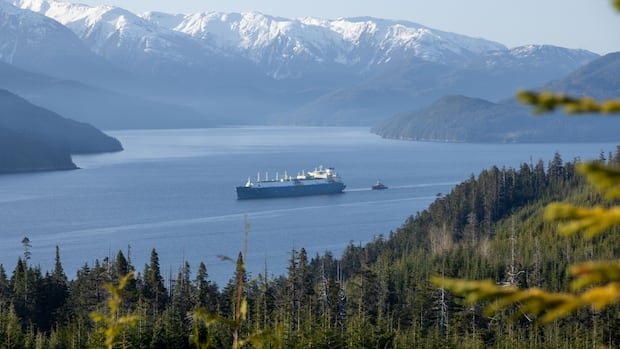

Prime Minister Mark Carney announced the selection of key projects by the federal government to kickstart swiftly, including the expansion of liquefied natural gas production in British Columbia and the upgrading of the Port of Montreal. Carney introduced a roster of five “nation-building” initiatives, highlighting the urgency to revive the tradition of rapid large-scale construction in the country. He emphasized the need to streamline the approval process for major infrastructure projects, shifting the focus from questioning the necessity of projects to strategizing on how to efficiently execute and accelerate them.
The initial set of projects entail advancing Phase two of LNG Canada in Kitimat, B.C., expanding the Darlington New Nuclear Project in Clarington, Ont., upgrading the Contrecoeur Terminal Container Project at the Port of Montreal, developing the McIlvenna Bay Foran Copper Mine Project in Saskatchewan, and expanding the Red Chris Mine in northwestern B.C. Carney projected that these projects collectively would inject over $60 billion into the Canadian economy and create numerous high-paying job opportunities.
Additionally, Carney disclosed plans for further projects that necessitate additional assessments before approval, including the Wind West Atlantic Energy initiative, the Alberta-based Pathways Plus carbon capture and pipeline project, an Arctic economic and security corridor, upgrades to the Port of Churchill, all-weather road infrastructure in Northern Canada, and the Alto high-speed rail corridor between Toronto and Quebec City. He introduced a “critical minerals strategy” aimed at expediting projects to secure final investment decisions within a two-year timeframe, with a focus on projects like Ontario’s Ring of Fire, the Slave Geological Area in the Northwest Territories, and the Labrador Trough.
Carney also outlined the government’s intention to establish a “Canadian Sovereign Cloud” to enhance data infrastructure and digital sovereignty in the country. The next phase of projects is scheduled for finalization before the Grey Cup in Winnipeg on Nov. 16. The prime minister stressed that the projects in the current pipeline have already undergone extensive consultations with Indigenous communities, provincial and territorial authorities, and local bodies, meeting most regulatory criteria and requiring minimal adjustments for approval.
Regarding funding, Carney mentioned that federal investment would complement private sector contributions significantly, although specific funding details were not disclosed. He underscored that the projects align with climate competitiveness goals, citing the potential environmental benefits of initiatives like the Pathways Plus project. Carney emphasized the importance of pursuing low-carbon projects to align with international environmental standards and enhance Canada’s trade prospects.
Alberta Premier Danielle Smith expressed optimism about the progress made in the initial round of projects, particularly in addressing the concerns of Albertans. Meanwhile, Conservative Leader Pierre Poilievre criticized the projects as insufficient and advocated for a different approach, proposing the Sovereignty Act to replace existing laws hindering project development. Environmentalists raised concerns about the focus on projects like LNG expansion, urging prioritization of initiatives that safeguard the environment and address pressing social issues affecting Canadians nationwide.