


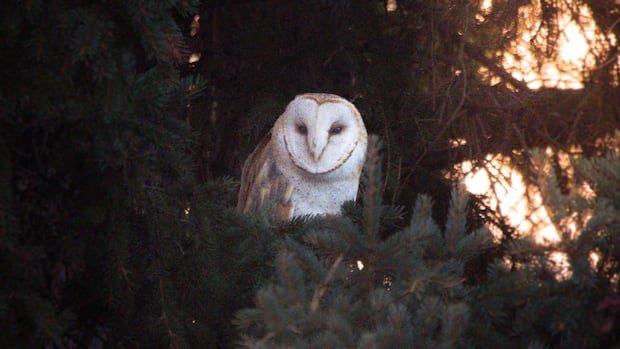

Wildlife photographer Brendon Clark had an extraordinary encounter recently when he spotted a barn owl, a species rarely seen in Alberta, far from its usual range in Canada. Clark, who was searching for a more common long-eared owl in a Calgary park, was surprised by the unexpected appearance of the barn owl, which is typically found in limited areas of Ontario and British Columbia.
The sighting of this elusive bird was described by Clark as surreal, akin to a scene from a movie. He managed to capture a few photographs of the barn owl before it disappeared, fulfilling a long-standing goal in his wildlife photography endeavors. Another wildlife photographer, Jennil Modar, also witnessed the rare bird on the same day, emphasizing the uniqueness of the moment.
Barn owls are not native to the Prairie provinces due to their sensitivity to low temperatures, which would be challenging for them to endure during the winter months. These owls possess a distinctive heart-shaped facial structure that aids in locating prey by sound, making them efficient nocturnal hunters.
In Canada, barn owls, along with northern spotted owls and burrowing owls, are classified as endangered species by the government. Their conservation status varies between the western and eastern populations, with habitat loss from urbanization and agriculture identified as significant threats to their survival. The estimated population of barn owls in Canada stands at around 650 individuals.
Colin Weir, from the Alberta Birds of Prey Foundation, highlighted the rarity of barn owl sightings in the province, noting that the center has only cared for two wild barn owls in the past four decades. Due to their non-migratory nature, encountering barn owls outside their usual habitat is uncommon, with many reported sightings often mistaken for other owl species, such as great horned owls.
The preference of barn owls for nesting in old structures contributes to their habitat loss in Alberta, a challenge not as prevalent in Europe where they are commonly found in churchyards and graveyards. Weir explained that the destruction of old buildings in Canada reduces suitable nesting sites for these birds, unlike in Europe where such structures are typically preserved.
Overall, the sighting of a barn owl in Alberta remains a rare and remarkable event, underscoring the need for conservation efforts to protect this iconic and endangered species.