


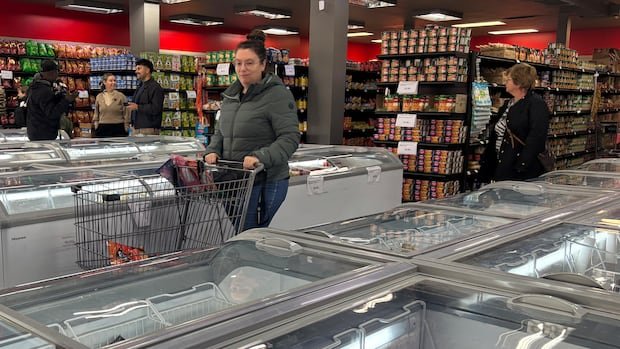

In the face of rising living expenses, Ron Robinson is committed to cutting costs, starting with his grocery spending. That’s why he frequents Liquidation Marie, a discount grocery chain in Montreal where prices can be up to 50% lower than traditional stores. Robinson recalls buying steaks for around six dollars each, a significant contrast to the $20 to $25 he might pay for the same at a larger retailer.
The growing trend of liquidation-style grocery stores is gaining traction nationwide as Canadians grapple with high food prices. Bianca Amor’s Liquidation Supercentre has expanded to 17 locations in Western Canada in 25 years, while The Grocery Outlet in southern Ontario now boasts over a dozen stores.
Liquidation Marie, established in 2012, has more than doubled its outlets in the past year. Co-owner Marie Eve Breton plans to open an additional 10 stores in 2026, bringing the total to 18 across Quebec. Breton attributes the store’s remarkably low prices to buying surplus or mislabeled items from major retailers at discounted rates and passing on the savings to customers.
The store’s inventory is constantly changing, featuring items like surplus or mislabeled products, attracting a steady flow of customers. Despite the unpredictability, Liquidation Marie draws an average of 30,000 shoppers weekly, with its Facebook group boasting over 139,000 members.
Driven by economic conditions, the surge in liquidation grocery stores reflects consumers’ desire to stretch their budgets amid a 27% increase in grocery prices over the last five years. Families facing financial constraints are seeking ways to cut costs, with food expenses being a flexible area for savings.
The success of stores like Liquidation Marie also stems from their strategic location choices and catering to neighborhoods where the concept resonates. Additionally, major retailers benefit from these stores by offloading discounted goods that might otherwise go to waste.
As per the Canadian Food Inspection Agency, best-before dates indicate quality rather than safety, leading consumers to embrace buying products past their prime. This shift not only saves money but also reduces food waste and eases pressure on the food supply chain.
Discount grocery shopping is becoming popular across various income levels, driven by heightened food insecurity and escalating prices. The trend is expected to grow as more consumers recognize the value in purchasing near-expiry items at reduced prices.