


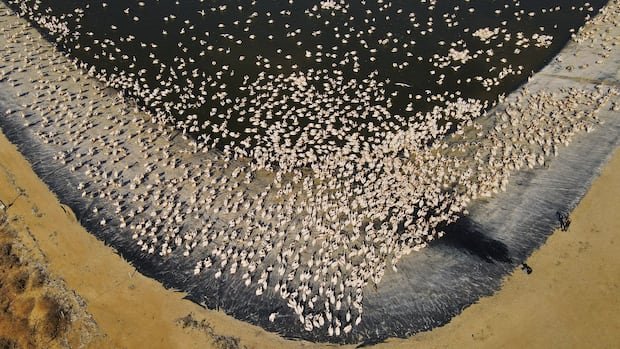

A satellite recently launched by the International Cooperation for Animal Research Using Space (ICARUS) project is set to track the migration patterns of various wildlife species around the globe. Following a hiatus due to the Russia-Ukraine conflict, the project resumed on Nov. 28, with researchers utilizing small transmitters attached to animals like birds, zebras, and sea turtles to monitor their behaviors and interactions with the environment.
The ICARUS project, conceptualized in 2002 as “The Internet of Animals” by Max Planck Institute of Animal Behavior biologist Martin Wikelski, has already deployed hundreds of thousands of tags on animals. By leveraging ground-based receivers and now a satellite-based system, researchers can collect data from remote areas inaccessible to terrestrial receivers, such as mountain tops and dense jungles.
The first space-based receiver was tested in 2020 on the Russian segment of the International Space Station, successfully tracking movements of animals from various species worldwide. Since then, advancements have led to the development of smaller, more energy-efficient receivers, which were recently deployed on a CubeSat launched into space alongside other satellites.
Efforts have also been made to miniaturize the transmitters placed on animals, with the latest versions weighing only four grams and capable of monitoring GPS positions, behaviors, and environmental conditions like temperature and humidity. The data collected from thousands of animals not only tracks their movements but also provides insights into environmental changes such as tree growth and glacial melt.
All data collected by the satellite is transmitted to Movebank, a global database for animal movements, and shared with researchers worldwide. By 2027, ICARUS aims to deploy six satellites for real-time global coverage to better understand and protect wildlife populations facing environmental challenges due to human activities. Citizen scientists can also contribute to the project through an animal tracker app, assisting in data collection and conservation efforts.