


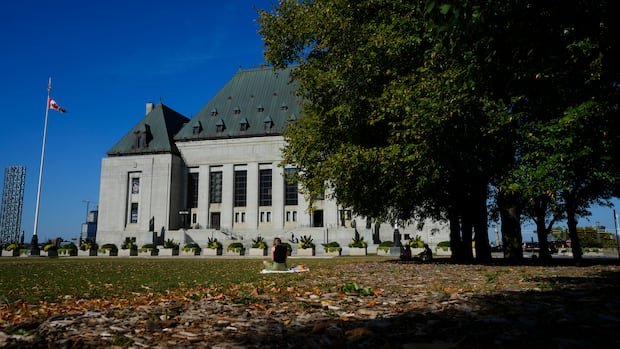

The Supreme Court of Canada has upheld the acquittal of an individual who was apprehended at the site of a drug overdose, ruling that he was protected by a law designed to decrease the number of deaths related to substance use.
In a 6-3 decision issued on Friday, the highest court stated that Paul Eric Wilson’s arrest in Saskatchewan five years ago substantially infringed upon his Charter rights due to the safeguarding effect of the Good Samaritan Drug Overdose Act.
Enacted in 2017, the Good Samaritan law, an adjustment to the broader Controlled Drugs and Substances Act, was intended to prevent fatalities from overdoses. According to the provision, individuals seeking emergency medical or police aid cannot be prosecuted for simple drug possession if the evidence was discovered because of their seeking assistance or remaining at the emergency location.
Wilson was present with three companions in Vanscoy, Sask., in September 2020 when one of them fell unconscious after using fentanyl. A member of the group dialed 911, prompting the arrival of an RCMP officer.
Subsequently, Wilson was taken into custody for drug possession and, following a search, he was apprehended a second time. Although he did not face any drug-related charges, he was eventually found guilty of several firearm and identity document offenses.
In 2023, Saskatchewan’s Court of Appeal overturned Wilson’s convictions and acquitted him, reasoning that he could not be charged with simple possession of a controlled substance due to the Good Samaritan provision, rendering his initial arrest unauthorized.
In the recent ruling, the Supreme Court endorsed the Court of Appeal’s decision. Pierre Hawkins, public legal counsel at the John Howard Society of Saskatchewan, which intervened in the case, praised the ruling, emphasizing the importance of prioritizing medical treatment over arrests in emergency situations involving drug use.
Justice Andromache Karakatsanis, writing for the majority of the Supreme Court, highlighted that the immunity from charge and conviction for simple possession explicitly mentioned in the Good Samaritan provision includes immunity from arrest for that offense. Karakatsanis emphasized that the provision aims to save lives and any interpretation allowing arrests for possession would deter individuals from seeking emergency aid in overdose cases.
The Vancouver-based Pivot Legal Society, another intervenor in the Supreme Court case, also welcomed the decision, stressing the significance of the ruling amidst ongoing drug-related challenges. The ruling provides clarity to law enforcement on responding to overdose incidents, advocating for prioritizing medical intervention over punitive measures.
In conclusion, the Supreme Court’s ruling on the Good Samaritan law sets a precedent for protecting individuals seeking help in overdose emergencies and underscores the importance of swift medical assistance in saving lives.