


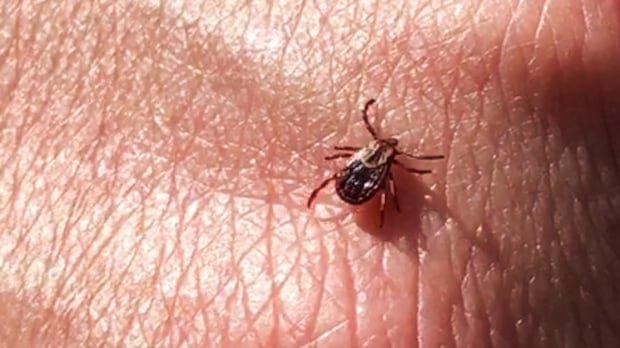

Previously, it was believed that encountering ticks was more common during peak summer and in areas with tall grass. However, Wellington-Dufferin-Guelph Public Health now advises doing tick checks after being outdoors in temperatures above 0 C.
According to Phil Wong, the health unit’s director of operations for health protection, data from a surveillance program showed an expansion in tick encounters beyond wooded trails.
Wong identified three main areas where ticks are prevalent: parks, trails, camping sites with long grass; private properties; and workplaces for outdoor workers.
He noted that many people are finding ticks on their properties while gardening or doing activities like raking leaves, not necessarily in long grass.
Wong reassured parents that ticks are unlikely to be on playgrounds due to their preference for damp areas over direct sunlight. However, he advised checking children for ticks after outdoor play.
Wellington-Dufferin-Guelph Public Health has updated its tick guidance to address the increasing local tick population and potential encounters with ticks.
Experts are warning Canadians to expect a continual influx of ticks from the U.S. as there are over 40 tick species in Canada, some native and others introduced via hosts like birds and deer.
Certain ticks carry diseases such as Lyme disease transmitted by the Western blacklegged tick and meat allergy caused by the lone star tick.
To enhance tick research, the Canadian Tick Research and Innovation Centre was recently established at Acadia University in Wolfville, N.S., along with the G Magnotta Lyme Disease Research Lab at the University of Guelph.
Justin Wood, the founder of Geneticks and a Lyme disease researcher, emphasized the importance of early diagnosis and intervention for tick-borne illnesses.
Despite hopes of reduced tick populations during cold winters, Wood explained that ticks survive by hibernating in leaf litter and do not significantly decrease in numbers during winter.
The health unit encourages the public to report ticks online for tracking purposes and emphasizes the importance of outdoor activities while advocating regular tick checks.