


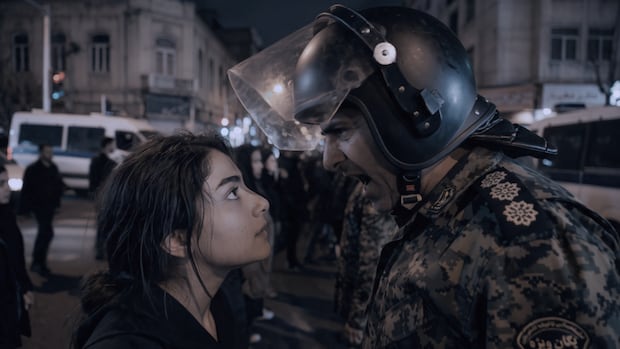

The Tribeca Festival is standing by its decision to include a fully AI-generated feature film in its schedule this year.
Dreams of Violets, a 74-minute movie centered on the Iranian resistance, was produced without any cameras or human actors. Filmmakers Ash and Pooya Koosha utilized AI technology to create the film for a mere $2,000 US.
A trailer for Dreams of Violets released on YouTube on Wednesday describes the film as a “docudrama feature inspired by real events from 47 years of Iranian civilian resistance.”
“Through the perspectives of five strangers, it vividly brings protest footage to life,” the synopsis explains. “At dawn, as Iranian forces execute injured protesters, a brutal soldier uncovers the five hiding in a dead-end alley. Above them, Amir, a child in a wheelchair, observes from a window and decides to take action.”
In recent years, Iran has experienced intense and widespread protests against its government, driven by grievances regarding the morality police, compulsory hijabs, and a struggling economy, among other issues.
The majority of feedback on the trailer for Dreams of Violets has criticized the film for its reliance on AI technology.
Tribeca co-founder Jane Rosenthal addressed these concerns, stating in a message to CBC News that the film is both relevant and captivating.
“The Tribeca Festival has consistently supported artists who challenge storytelling norms and explore innovative creative avenues,” she remarked.
Rosenthal highlighted the film as “a compelling illustration of how new technologies like AI can serve not only as innovative tools but also as mediums for profound human narratives.”
She noted that the festival’s team was inspired not only by “the technological accomplishment but also by the emotional immediacy and significance of the story itself.”
Film not the first to ignite AI debate
Dreams of Violets is scheduled to debut on June 10 in New York City, yet it is not the first film to stir controversy regarding AI’s role in media. While some prominent creators advocate for its use, others have condemned it.
Director Darren Aronofsky has embraced AI with his studio, Primordial Soup, which has produced a series of AI-generated short films focused on the American Revolution. Director Steven Soderbergh has defended the use of Meta AI software in his 2026 documentary about John Lennon, which premiered earlier this month at Cannes Film Festival.
Conversely, AI production company Particle6 faced backlash while promoting Tilly Norwood, a fully AI-generated “actress” they aimed to market as a star. Additionally, director James Cameron has stated that AI will never substitute for actors and artists in his films, a sentiment echoed by filmmaker Guillermo Del Toro, who expressed he would “rather die” than use generative AI.
-
Introducing Tilly Norwood, the AI ‘actress’ inciting backlash from real Hollywood stars
-
Canadians may seek AI for medical advice but don’t want it replacing human practitioners, poll indicates
However, Ash Koosha, the director and writer of Dreams of Violets, views AI as a storytelling medium akin to animation.
“For me, this represents a distinct genre,” Koosha informed CBC News.
Originally from Tehran and currently residing in London, U.K., Koosha stated that news in January about the Iranian regime’s killings of protesters inspired him to create the film.
He produced it during evenings and weekends, utilizing tools such as Kling AI, Claude, Google Gemini, and Nano Banana, which he claims enabled him to implement changes rapidly and affordably.
Koosha is the founder of Fountain 0, a company dedicated to AI-generated films and television shows. Dreams of Violets marks the company’s inaugural film.
He explained that the cost, challenging subject matter, and production duration of a conventional, non-AI film addressing Iranian protests would have rendered it an unfeasible undertaking for him.
Kate Ziegler, president of the Alliance of Canadian Cinema, Television and Radio Artists (ACTRA) Toronto, expressed her concerns regarding AI potentially displacing jobs and undermining “the creative essence of humanity within us.”
She advocated for a more extensive discussion across various industries regarding the implications of AI.
“Our sector, encompassing film and television, serves as a warning signal in this regard,” she remarked.
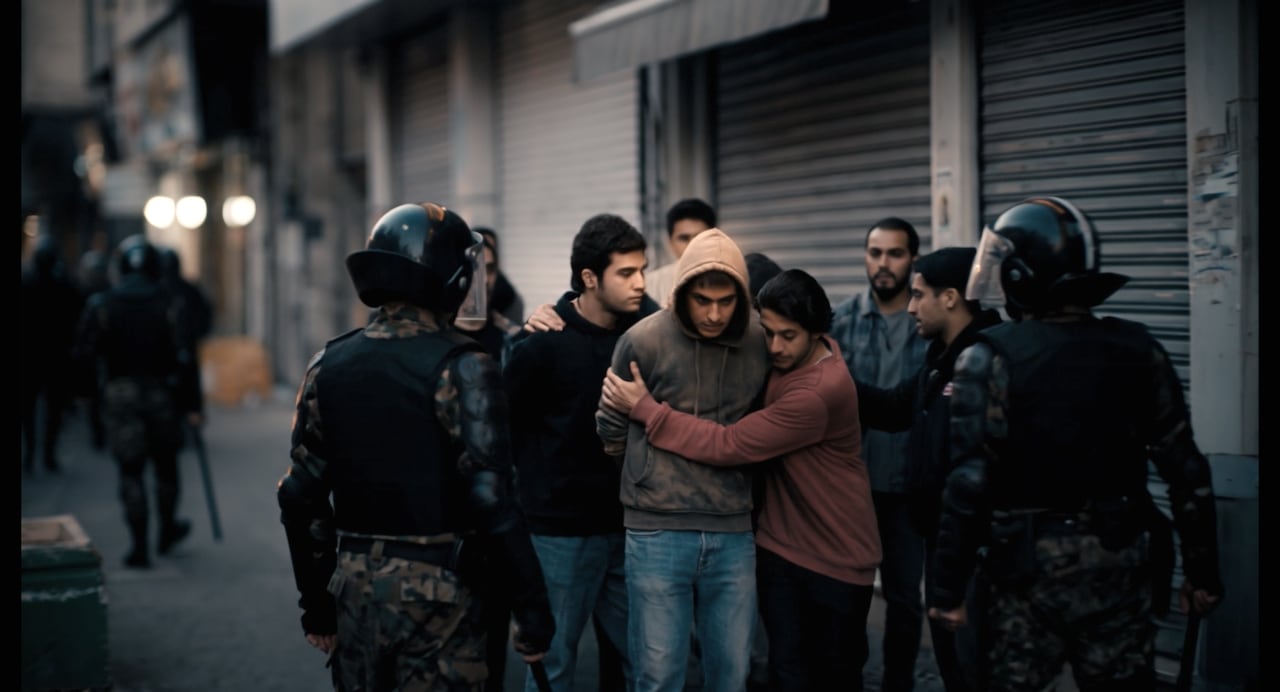
Another scene from the docudrama, which the festival’s co-founder described as ‘a powerful example’ of how AI could function as ‘vehicles for deeply human storytelling.’ (Submitted by Ash Koosha)
AI presents challenges for festivals, expert warns
The rise of AI poses a complex challenge for film festivals, according to Richard Lachman, a digital media professor at Toronto Metropolitan University and author of Digital Wisdom: Searching for Agency in the Age of AI.
He noted that while there is significant resistance within the industry, this technology also has the potential to democratize access to filmmaking.
“This film was produced for $2,000 [US], and it’s competing in festivals. So, there’s a democratizing effect,” he pointed out.
“If you lack a large film crew, elaborate sets, and top-tier actors, you can still share your unique perspective and have it showcased at a film festival.”
However, Lachman expressed concerns about how viewers might interpret AI-generated content that appears realistic.
“We have certain expectations that if it resembles a human or looks like photojournalistic footage, we are inclined to interpret it as authentic photojournalism,” he noted.
“Thus, I worry about the need to caution everyone to ‘not trust what you see’ because this could lead us to question the authenticity of real news footage.”