


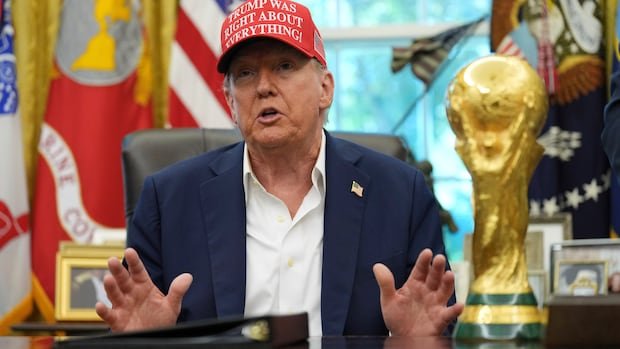

Earlier this week, President Donald Trump issued a threat to relocate World Cup soccer matches slated for Gillette Stadium. This move reflects his authoritative governing style, though it also highlights a degree of geographical confusion. Trump criticized Boston’s mayor, Michelle Wu, despite Gillette Stadium being situated in Foxborough, approximately 30 minutes away from the city. This situation mirrors the Ajax Community Centre’s relationship with Toronto. Trump’s influence in the sports industry is evident, showcasing his ability to exert control over decision-makers, a power most individuals lack.
Despite facing criticisms, Trump’s history in the sports realm reveals his capacity to enact significant changes. Notably, as the owner of the New Jersey Generals in the USFL, Trump’s intervention led to the success of superstar Herschel Walker. However, his decisions have not always yielded positive outcomes, as exemplified by the USFL’s collapse due to a failed strategy to compete with the NFL.
In light of Trump’s recent statement regarding the World Cup, it remains uncertain if he can redirect games from Foxborough or other cities. FIFA determines host cities well in advance, making last-minute changes challenging. Given Trump’s track record, skepticism is warranted regarding his motives and explanations. The potential relocation of World Cup matches appears to be a strategic move rather than a logistical necessity.
As the situation unfolds, it is essential to approach Trump’s actions with caution and critical analysis. His past endeavors in the sports industry and political landscape suggest that his influence will persist. The upcoming months may bring unexpected developments, underscoring the unpredictable nature of Trump’s involvement in major events.