


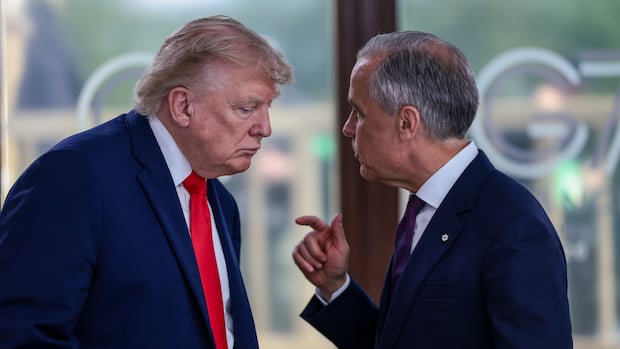

The representative of the Ontario government in Washington has stated that U.S. President Donald Trump’s recent warning of imposing 50 percent tariffs on numerous Canadian products suggests the administration is recognizing the impact of Canada’s retaliatory trade measures on the American economy.
In an interview with CBC’s Power & Politics, David Paterson highlighted a particular concern mentioned in the fact sheet that accompanied the tariff announcement: a 22 percent decrease in U.S. auto exports to Canada since April of the previous year.
“This marks a significant shift in trade, moving jobs from the United States to other regions, and it is a component of the federal government’s retaliatory measures,” Paterson remarked during his conversation with guest host Peter Armstrong.
“These developments are being acknowledged now, and I believe it serves as a foundation for constructive discussions moving forward.”
Despite having lifted several other tariffs last summer, Canada continues to impose retaliatory tariffs on U.S. automobiles, auto parts, steel, and aluminum.
The Trump administration also cited provincial restrictions on U.S. alcoholic beverages as a reason for the impending 50 percent tariffs, which are scheduled to take effect on August 19. U.S. spirit manufacturers have expressed that the ban has severely impacted their sales, while American wine sales in Canada fell by $343 million USD in 2025.
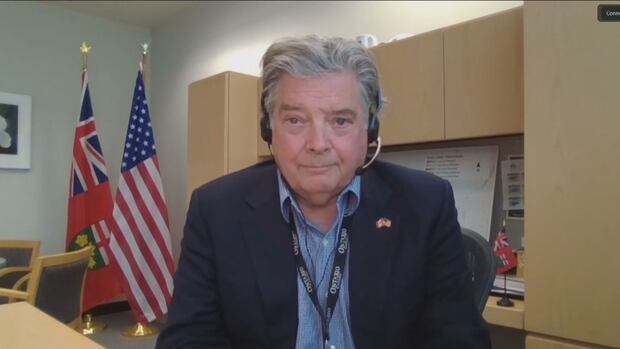
With only 20 days left before the 50 percent tariff deadline, Canada’s trade minister returns from Washington, D.C. without any indications of a forthcoming agreement. Moreover, the prime minister expresses that he ‘doesn’t see the value’ in using energy exports as leverage against the U.S. Power & Politics speaks with Ontario’s representative in Washington, David Paterson.
Paterson noted that while Canada’s retaliatory measures have upset officials within the Trump administration, this situation could serve as a “starting point” for the ongoing trade discussions.
“There is a genuine frustration among U.S. Trade Representative Jamieson Greer and others, and this represents a chance to ask, ‘Could we collaborate as partners?'” Paterson explained.
Prime Minister Mark Carney mentioned that he had a conversation with Trump last week after the latest tariff announcement and both leaders agreed to “intensify” trade discussions.
-
What tariffs are still in place? Tracking the Canada-U.S. trade war
-
Carney says he doesn’t ‘see the value’ in using energy as leverage in U.S. trade talks
Paterson observed an increase in activity in Washington since that conversation.
Carney met with provincial leaders last week to discuss the looming 50 percent tariff threat and explore potential responses.
Addressing reporters on Wednesday, the prime minister stated that while the government is preparing for possible reactions if the tariffs are enacted, he is focused on “building towards an agreement” prior to August 19.
Paterson supported Carney’s viewpoint.
“We are currently in a situation where, among the friendliest nations on earth, we have the opportunity to work towards de-escalation,” he remarked.
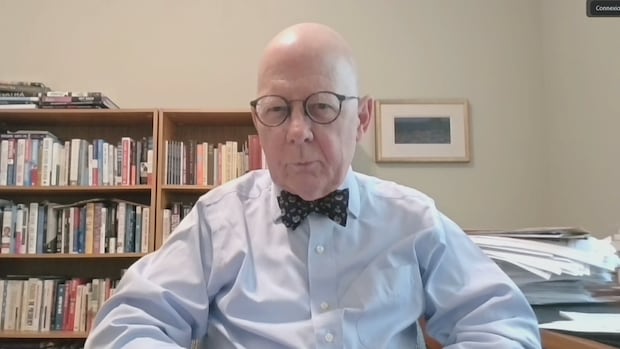
From a trade war, to threats of becoming the 51st state, to the delay of a cross-border bridge’s opening, U.S. President Donald Trump consistently targets his northern neighbor. Power & Politics interviews rhetoric and political communication professor Robert C. Rowland regarding Trump’s issues with Canada and the potential implications for U.S. politics.
Dominic LeBlanc, the federal minister responsible for trade relations with the U.S., visited Washington this week and held discussions with Greer on Wednesday.
LeBlanc shared on social media that the meeting was “comprehensive,” and both parties “agreed to stay in close contact and continue collaborating.”
On Tuesday, two major labor unions addressed Greer, urging the administration to refrain from implementing the 50 percent tariffs.
The leaders of the United Steelworkers and the International Association of Machinists and Aerospace Workers indicated that the Canada-U.S. trade relationship has been “characterized by division” over the last year.
“Our focus should be on aligning our trade policies to tackle the challenges posed by unfair and predatory trade practices from nations like China, rather than deepening the divide between our countries,” the letter stated.