


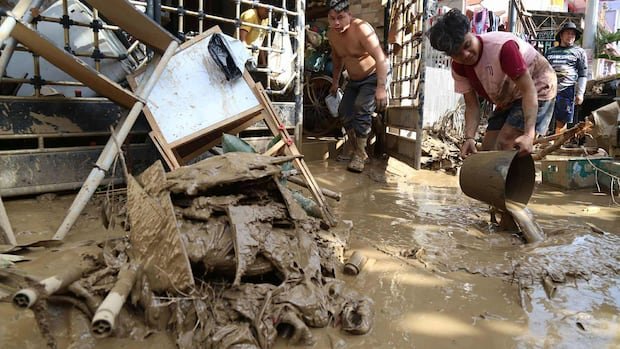

Philippine President Ferdinand Marcos Jr. has announced a state of emergency following the devastating impact of Typhoon Kalmaegi in central provinces, resulting in the deaths of 114 individuals and leaving 127 others missing. The calamity, considered the deadliest natural disaster in the country this year, primarily led to fatalities due to drowning in flash floods, with a significant number occurring in the severely affected province of Cebu before the cyclone exited the archipelago into the South China Sea.
Approximately two million people were affected by the typhoon, forcing the displacement of over 560,000 villagers, with nearly 450,000 seeking refuge in emergency shelters. The state of emergency declaration aims to expedite fund distribution, prevent food hoarding, and curb overpricing. Kalmaegi transitioned away from Palawan province towards the South China Sea, bearing sustained winds up to 130 km/h and gusts reaching 180 km/h.
Reports from Bernardo Rafaelito Alejandro IV, deputy administrator of the Office of Civil Defence, and local officials highlighted the majority of casualties in Cebu due to the typhoon’s impact, which induced flash floods and caused water bodies to swell. Residents found themselves stranded, climbing onto rooftops seeking rescue as floodwaters surged. The Philippine Red Cross received distress calls from individuals in Cebu requiring assistance from their inundated residences.
In Cebu, 49 individuals perished in floods, while others succumbed to landslides and falling debris; 13 individuals remain missing. Moreover, 62 people are unaccounted for in the neighboring provinces of Negros Occidental and Negros Oriental. Governor Pamela Baricuatro of Cebu voiced concerns over the challenges exacerbated by years of quarrying, leading to river congestion and inadequate flood control infrastructure in the province.
Cebu, a province housing over 2.4 million residents, declared a state of calamity to hasten emergency aid distribution. Recent corruption scandals revolving around substandard flood control projects across the Philippines have sparked public outrage and demonstrations. The province was still recovering from a 6.9 magnitude earthquake in September, further complicating the situation.
As Kalmaegi heads towards Vietnam and Thailand, evacuation efforts and safety precautions are underway in anticipation of the storm’s impact. The Philippines, accustomed to frequent typhoons, earthquakes, and volcanic activity, remains vulnerable to natural disasters. Central Vietnam, recovering from recent flooding, braces for further rainfall, while Thailand prepares for heavy rain and potential flooding from Kalmaegi.
The global community continues to monitor the situation as countries in the storm’s path make necessary preparations to mitigate potential risks and safeguard the population.