


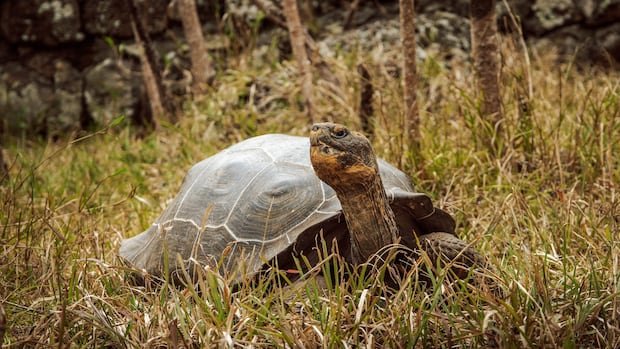

After a hiatus of over 180 years, giant tortoises have made a comeback on Floreana Island in the Galápagos archipelago of Ecuador. In a significant conservation effort, 158 juvenile hybrids were reintroduced to the island last week through a captive breeding program initiated in 2017. This move aims to restore the population of giant tortoises on an island where they were once abundant before facing extinction due to various historical factors like whaling, a devastating fire, and human exploitation in the 1840s.
The release of these young tortoises, overseen by conservation biologist James Gibbs, has been likened to witnessing a milestone akin to a child’s first steps. Gibbs, who is the Vice President of Science and Conservation at the Galápagos Conservancy, described the enthusiastic exploration of their new habitat by the lively tortoises. The released juveniles, expected to reach weights of up to 600 pounds in the next two decades, are part of a larger plan to gradually reintroduce a total of 700 tortoises to Floreana. These juveniles carry genetic traits ranging from 40% to 80% of the extinct Floreana species, Chelonoidis niger, as confirmed by Christina Sevilla, the Director of Ecosystems at the Galapagos National Park.
Biologist Washington Tapia emphasized the genetic significance of reintroducing a species with a substantial genetic connection to the original inhabitants of the island. Beyond a mere numerical boost, the initiative aims to revive a lost genetic lineage on Floreana Island. The hope is that these 158 newcomers, aged between eight and 13 years and weighing 30 to 50 pounds, will play a crucial role in rejuvenating the island’s ecosystem over time, considering their potential lifespan of over a century.
The release process was a labor-intensive endeavor, with Gibbs and park rangers physically carrying the heavy juveniles up the volcanic island’s slopes in challenging weather conditions before setting them free in designated release sites. The released tortoises now coexist with a diverse array of wildlife and human inhabitants on Floreana Island, facing challenges from non-native species introduced by humans, such as rats, cats, pigs, and donkeys, as well as invasive plants like blackberry and guava. The tortoises have been equipped with GPS trackers to monitor their movements, ensuring their successful acclimatization to their restored habitat.
As researchers continue to monitor the tortoises’ progress, the successful reintroduction of these giant tortoises marks a crucial step in the ongoing conservation efforts to revive the unique ecosystem of Floreana Island in the Galápagos archipelago.