


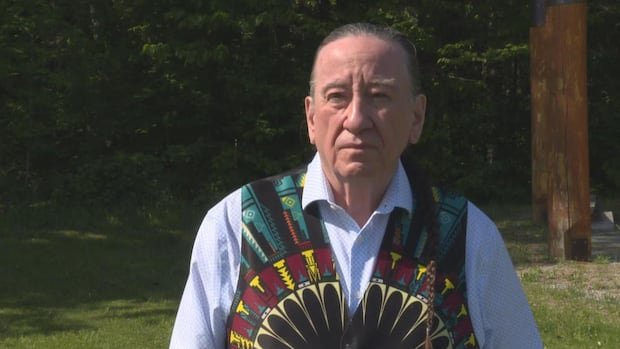

Gilbert Whiteduck highlights the significance of repatriating Indigenous artifacts from the Vatican museum as a crucial step in fostering reconciliation. However, he emphasizes the importance of handling these items with utmost reverence due to their sacred nature.
Whiteduck, the education director for Kitigan Zibi Anishinābeg, stresses that the repatriation process should not merely involve relocating the objects from the Vatican archives but should also include performing necessary ceremonies to honor their sacredness before they are returned to their place of origin.
Recent discussions between the Canadian Catholic Church, the Vatican, and the Canadian Conference of Catholic Bishops (CCCB) indicate progress towards returning the Indigenous items by the end of the year. However, Whiteduck notes a lack of official information on the specific objects earmarked for potential return to his community, prompting the need for transparency in these discussions.
The repatriation process involves a “church-to-church” donation method, a practice that Cheyenne Lazore questions. Lazore, manager of the Akwesasne Rights & Research Office, advocates for a thorough identification process to ensure that each First Nation can claim and recognize their respective cultural belongings.
The Indigenous artifacts are expected to be temporarily housed at the Canadian Museum of History in Gatineau, Quebec, where collaboration between experts and Indigenous representatives will determine the appropriate destinations for the items.
Calls for the return of Indigenous artifacts taken during the residential school era have been ongoing for years, with Indigenous leaders in Canada meeting with Pope Francis in 2022 to address this issue. Whiteduck underscores the need to acknowledge the historical context of these artifacts’ removal and emphasizes the importance of understanding their significance beyond their physical form from the Indigenous perspective.
While the return of these items to their communities is seen as a step towards healing, Lazore acknowledges that full reconciliation is still a distant goal, especially considering the unresolved traumas stemming from the residential school system.
The artifacts, including a human face mask from Haida Gwaii, a kayak from Inuvialuit, and a pair of beaded moccasins, were sent to the Vatican in the early 1920s following a request by Pope Pius XI for Catholic missions worldwide to donate Indigenous belongings, totaling around 100,000 items that became part of the Vatican’s permanent collection.