


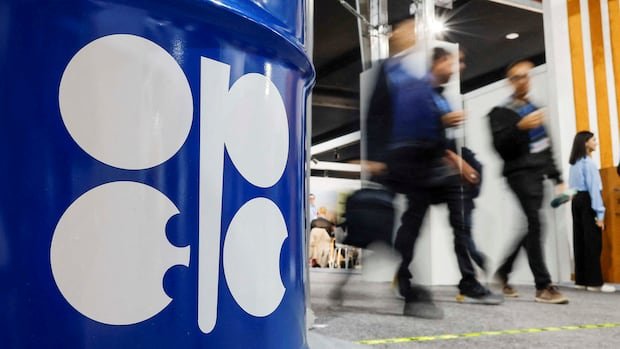

The United Arab Emirates has announced its decision to withdraw from the Organization of the Petroleum Exporting Countries (OPEC) and OPEC+ effective this Friday. This move comes amidst a significant energy crisis triggered by the Iran conflict, revealing disagreements among Gulf nations.
Having been a member of OPEC since 1967 through its emirate of Abu Dhabi and as an independent country since 1971, the U.A.E.’s departure weakens OPEC’s influence over global oil supplies. This decision also deepens the divide between the U.A.E. and Saudi Arabia, a key OPEC player.
The U.A.E.’s exit allows it greater flexibility to ramp up production once Gulf exports resume, as it will no longer be bound by OPEC production quotas. The announcement was made through the U.A.E.’s state-run WAM news agency, emphasizing the country’s strategic vision and commitment to global energy markets.
Energy Minister Suhail Mohamed al-Mazrouei stated that the decision was made after thorough consideration of the country’s energy strategies, without consulting with other nations, including Saudi Arabia. The strained relations between the U.A.E. and Saudi Arabia, coupled with security concerns in the region, have influenced this move.
Amid ongoing challenges in shipping exports via the Strait of Hormuz due to Iranian threats, the U.A.E.’s departure from OPEC is seen as a win for U.S. President Donald Trump, who has criticized OPEC for inflating oil prices. The U.A.E.’s exit raises questions about Saudi Arabia’s role as the market’s stabilizer.
The decision was anticipated as the U.A.E. has been pushing back against OPEC production quotas in recent years. With global spare capacity at low levels, the U.A.E.’s ability to increase oil production adds complexity to the market dynamics. This shift signifies a changing geopolitical landscape with implications for global energy markets.
Despite the withdrawal, immediate market impacts are expected to be minimal due to ongoing supply constraints caused by the Iran conflict. However, in the long term, this move could lead to increased oil supply and potential market instability.