


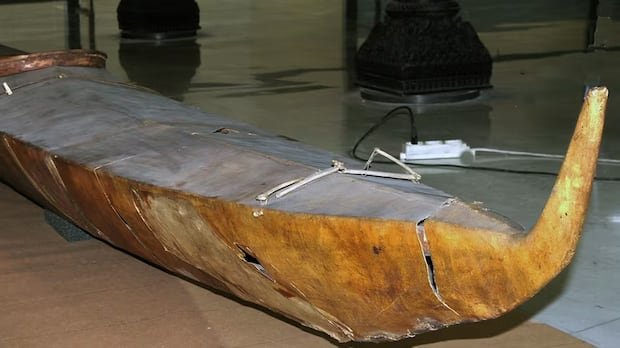

A historic Inuvialuit kayak, utilized in beluga and whale hunts over a century ago, along with 61 other significant cultural artifacts from various Indigenous communities, have been housed in the secure vaults of Vatican Museums. However, these culturally significant items are set to return to Canada on December 6 after being generously gifted by Pope Leo XIV to the Canadian Conference of Catholic Bishops (CCCB). This charitable act was confirmed in a joint statement released by the Vatican and the CCCB.
The decision to repatriate these items was made following a meeting at the Holy See between Pope Leo XIV and a delegation from the CCCB, which included Bishop Pierre Goudreault, Rev. Richard Smith, Archbishop of Vancouver, and Rev. Jean Vézina, the general secretary. The statement highlighted that this gesture of returning the artifacts serves as a tangible symbol of dialogue, respect, and unity, as desired by His Holiness Pope Leo XIV.
The CCCB has taken the responsibility to ensure the proper preservation, respect, and safeguarding of these artifacts. They have announced their intention to promptly transfer the items to the National Indigenous Organizations (NIOs), who will then oversee the reunion of these artifacts with their respective communities of origin.
Negotiations for the return of these cultural treasures have been ongoing for two years, led by Indigenous groups who have covered the expenses related to the negotiations and the repatriation process. The return of these items is a significant development, especially considering the historical injustices suffered by Indigenous communities, including the traumatic legacy of residential schools.
The repatriation process involves the artifacts being meticulously packaged, flown to Montreal via Frankfurt on an Air Canada flight, and eventually transported to the Canadian Museum of History in Gatineau, Quebec. Experts will assess the condition of the items, verify their origins, and collaborate with Indigenous representatives to determine their final placement.
This move has been applauded by various stakeholders, including Canadian Foreign Affairs Minister Anita Anand, who emphasized the importance of honoring Indigenous cultural heritage and supporting the ongoing efforts towards truth, justice, and reconciliation. The Vatican’s decision to facilitate the return of these artifacts through a church-to-church “gift” mechanism helps avoid setting a precedent of direct returns to nations or communities.
The artifacts, including the historic kayak and other valuable items, were part of a collection of 100,000 objects sent to Rome in 1925 for a world exhibition. These items reflect a dark chapter in history when Indigenous communities faced forced conversion, cultural suppression, and the impacts of the residential school system in Canada. The return of these artifacts is a crucial step towards acknowledging past wrongs and promoting healing and reconciliation with Indigenous communities.
Before the artifacts commence their journey back home, Indigenous leaders stress the importance of conducting ceremonies to honor these sacred objects. While some critics have raised concerns about the church-to-church approach, advocating for more direct community involvement in the identification process, the return of these culturally significant items marks a positive stride towards acknowledging and rectifying historical injustices.