


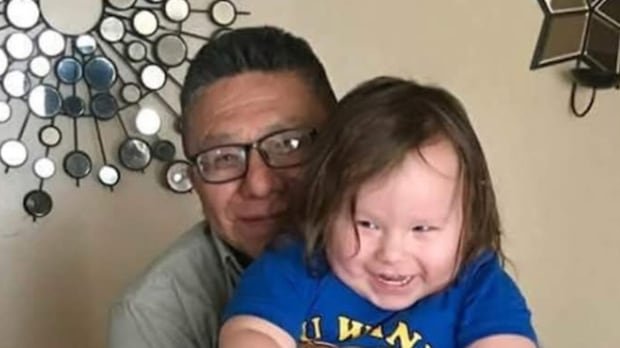

As a father from York Factory First Nation residing in Ste. Anne, Manitoba, my son, who is six years old, holds a special place in my heart. Last year marked his first significant encounter with school, and one October day stood out from the rest.
Arriving at the school entrance, my son hesitated, refusing to ascend the stairs. He clung to me, tears streaming down his face, pleading, “Please, Dad… don’t make me.”
Attempting to seek assistance in the school office only escalated the situation. His distress intensified upon the teachers’ arrival, as he struggled, cried, and desperately tried to retreat into my arms while they restrained him. Witnessing my typically gentle and sweet boy in such terror shattered something within me that I had not realized was still fragile.
This was not a mere reluctance to attend school; this was a profound, genuine fear.
That moment triggered memories of a harrowing incident from the previous summer in Calgary, where a man attempted to grab my son right before my eyes.
During a family outing, as we explored a local park following a disappointing visit to an overcrowded zoo, a stranger suddenly seized my son by the shoulders. Though his intentions remain unknown, my immediate reaction was driven by sheer instinct and protective panic, swiftly reclaiming my son from the man’s grasp. The unsettling gaze the man gave me lingered, leaving a sense of danger that stayed with me.
Our journey back home to Ste. Anne, Manitoba, was filled with silence, as none of us felt at ease after the incident.
Since that day, my son has exhibited changes in behavior, becoming more vigilant around strangers, clinging tightly to me, and frequently checking for my presence. Similarly, I find myself consumed by anxiety whenever he is out of sight, scanning every room and doorway for reassurance. That singular moment with the unknown man had stolen something from both of us, resurfacing vividly during the recent school incident.
As I stood in the school office, observing my son’s distress and futile attempts to reach me, an unexpected realization struck me.
Visions of my late father at the same age as my son, being separated from his family and gripped by fear, flooded my thoughts. A survivor of the Sixties Scoop and a resident of a Manitoba residential school, my father carried unasked-for trauma, silently battling unresolved pain that had haunted him into adulthood.
Despite his struggles, my father’s resilience and teachings of pride and humor shaped my admiration for him, even amidst the challenges stemming from his own traumatic past.
Reflecting on the emotional distance I sometimes felt with my father, attributed to his upbringing in a residential school devoid of consistent safety and affection, I came to understand his struggles better. His tendency to shut down in stressful or emotional situations was not an act of cruelty but a defense mechanism, a survival response ingrained in him from a young age.
Parenting has offered me a new perspective on my father’s experiences, revealing the child within him who yearned for safety, gentleness, and comfort—essentials he was deprived of during his formative years.
The profound connection I share with my youngest son, named after my father, holds immense significance for me.
Thus, witnessing my son’s distress in the school office evoked a deep-seated intergenerational pain—a reminder of generations denied the choice of safety and the agony of parents powerless to protect their children.
Unlike my father’s lack of agency, I had a choice that day.
Therefore, I chose to bring my son home—not out of indulgence or avoidance but to shield him from fear, shame, and coercion, determined to break the cycle of generational trauma.
Embracing my son at home until he finally relaxed, tears flowed freely as I mourned for him, myself, and my father—acknowledging the absence of a guiding presence during his moments of fear.
If given the chance, I would convey to my father today that I recognize him not just as my dad but as the vulnerable child he once was, burdened with unspoken pain. I would express gratitude for the love he bestowed upon me, even in moments of difficulty, and pledge to honor his memory by offering my children the tenderness and security he longed for.
The pivotal day was not about skipping school but about dismantling a cycle, opting for love over fear, gentleness over shame, and safety over silence—listening not only to the child before me but also to the child my father once was.
Gratefully, I embrace the role of a father