


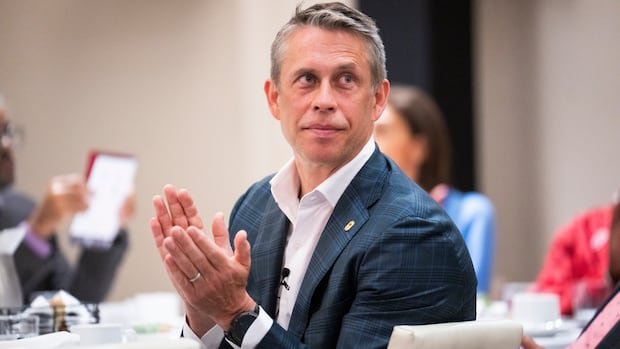

In his quest for the Canadian prime minister position, Mark Carney employed a sports-themed strategy. His campaign slogan, “elbows up,” garnered widespread support, and a campaign ad featured him alongside actor Mike Myers near a hockey rink. Carney’s election victory was aided by leveraging hockey imagery to counter U.S. threats.
The recent 4 Nations Face-Off tournament, the first best-on-best men’s hockey event since 2016, reignited the nation’s passion for hockey. The tournament culminated in Connor McDavid’s overtime goal securing a win against the Americans, evoking a sense of unity among Canadians.
While Canadians exhibit a strong affinity for hockey, support for other sports is evident, such as the Blue Jays’ World Series win, the Raptors’ 2019 championship, Bianca Andreescu’s U.S. Open triumph, and the men’s 4×100-metre relay gold at the Paris Olympics.
Despite the widespread acknowledgment of sports’ positive impact on the country, the push to increase funding for sports in Canada has been lacking. Core funding for national sport organizations (NSOs) has stagnated for two decades, with impending budget cuts for some organizations.
Adam van Koeverden, Olympic sprint kayak champion and current secretary of state for sport, emphasized the need for increased investment in sports. A Deloitte report commissioned by the Canadian Olympic Committee (COC) revealed the economic benefits of physical activity and sports tourism in Canada.
The Future of Sport in Canada Commission, established in 2023, urged the government to urgently boost funding for NSOs. The report highlighted the necessity of adequate funding to support safe sport practices and operational requirements.
NSOs have faced financial challenges, leading to cuts and budget constraints. The reliance on government funding by 90% of NSOs underscores the need for diversified revenue streams. The funding crisis has repercussions on athletes and sports organizations, impacting their performance and operational capabilities.
Efforts to secure corporate sponsorships present challenges for NSOs, especially those with limited star power. Athletes are often left to advocate for themselves, seeking community involvement to attract sponsors. The financial strains on NSOs trickle down to athletes, affecting their training and performance.
The high costs associated with international competitions, exacerbated by currency fluctuations, pose financial burdens on NSOs. The safe-sport crisis necessitates additional funding for oversight, training, and support services to ensure athlete well-being.
In conclusion, the financial challenges faced by Canadian sports highlight the need for increased government funding, diversified revenue sources, and a renewed focus on athlete well-being. The long-standing funding issues require a comprehensive approach to sustain and enhance the Canadian sports system.