


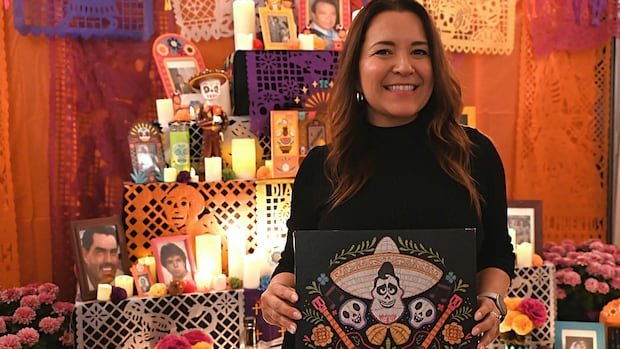

This year, Karla Frey faced challenges while preparing her traditional offering in her Boucherville, Quebec residence. A tragic car accident claimed the lives of her five-year-old neighbor and his mother two months ago. Recalling the boy’s annual visits and his interest in her offering, Frey was deeply affected by the mother and son’s untimely passing.
Despite the heavy emotions, Frey persevered and completed her altar setup, adorned with picture frames, candles, pan de muerto bread, papel picado decorations, mezcal, tequila, and cempasúchil flowers. Reflecting on the joy the little neighbor found in her offering, Frey dedicated this year’s altar to him and his mother, finding solace in their memory.
El Día de Muertos, also known as Day of the Dead, is a significant multi-day celebration deeply rooted in Indigenous customs, observed with vibrant festivities throughout Mexico. In Quebec, the Mexican community upholds these ancient practices, bridging cultural connections between their adopted home and their heritage.
Frey, who had not previously observed Día de Muertos in Mexico City, now sees the holiday as a means to reconnect with departed loved ones and unite Quebec with her roots. Embracing the tradition, she hosts gatherings where friends share memories of their beloved deceased, offering mezcal, water, and tequila on her altar to quench the spirits’ thirst and guide them with incense and photographs.
For Gerardo Familiar Ferrer, celebrating Día de Muertos with Indigenous friends in Oaxaca transformed his perception of the holiday, fostering a profound respect for the tradition. In Gatineau, his altar pays homage to his late grandmother and serves as a platform to share the essence of the celebration with others.
At UNAM-Canada in Gatineau, an interactive exhibit immerses visitors in the essence of Día de Muertos, symbolizing the connection between the afterlife and the living through themed displays. Reflecting on personal losses, Rafael Benitez in Montreal finds solace and connection through organizing the city’s Día de Muertos festival, transforming grief into a meaningful cultural exchange.
As the festival evolves into a platform for intercultural dialogue, Benitez emphasizes the resilience of Indigenous communities in preserving ancestral traditions. Through themed altars and events, the festival aims to promote understanding and unity among diverse communities in Montreal.
In conclusion, Día de Muertos serves as a day of celebration and remembrance, dispelling fear and embracing joy in honoring departed loved ones. Karla Frey’s meticulous altar curation not only honors her ancestors but also serves as a poignant reminder to her daughters of the profound love she wishes to be remembered by. Embracing life to the fullest, Frey’s dedication to the tradition exemplifies the enduring spirit of the holiday.