


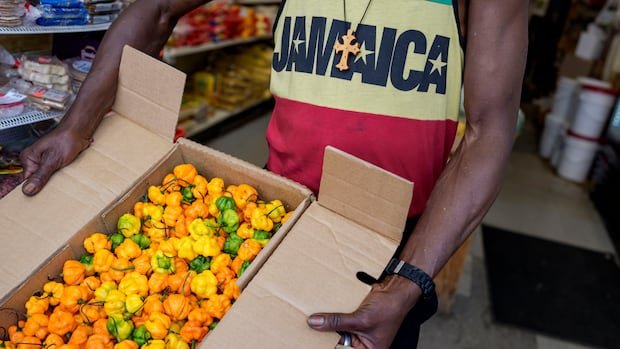

In exciting news for spice enthusiasts, Jamaican Scotch bonnet peppers are facing a scarcity issue. These fiery peppers play a vital role in Jamaican jerk seasoning and hot sauces, which are not only popular in Jamaica but also in Canada and part of a growing global demand for Caribbean flavors.
Scotch bonnets, known for their spiciness, are a finicky crop susceptible to pests and diseases, leading to local supply challenges. Recent weather events, such as Hurricane Melissa in October, have further impacted Jamaican produce. Sheldon Grant, a farmer in St. Catherine Parish, Jamaica, highlighted the sensitivity of the crop, describing it as a gamble due to its potential and risks.
Despite their efforts, Grant and his wife, Shanice Bedward-Grant, faced setbacks in growing Scotch bonnets due to pests, diseases, and natural disasters. The recent hurricane wiped out their sweet peppers and sorrels, adding to their agricultural struggles.
With reports of Scotch bonnet shortages and price hikes, some hot sauce makers have had to reduce production. In Toronto, obtaining Scotch bonnets has become challenging and costly, partly due to rising jet fuel prices affecting shipping expenses.
The scarcity has led to doubled prices in some cases, making it more cost-effective for distributors to source peppers from other countries like Trinidad and the Dominican Republic. Retailers in Toronto have managed to keep their shelves stocked with Scotch bonnets, but the increased demand is evident, with more businesses ordering in bulk.
The shortage is impacting hot sauce companies, potentially driving up retail prices for the condiment. The unique flavor profile of Scotch bonnet peppers makes them irreplaceable, leading to concerns about a possible shortage of hot sauces.
Sharna Davidson, the owner of Tata Hot Sauce, Take Out & Catering in Toronto, faced challenges sourcing authentic Jamaican Scotch bonnets due to the scarcity and price hikes. To compensate, she blends habanero peppers with the Scotch bonnets she has to maintain the heat level in her hot sauce batches.
While the crop challenges may affect the availability and cost of certain hot sauces, experts believe that a complete shortage is unlikely. The demand for quality Scotch bonnet seeds surpasses the supply, and farmers like Grant continue to face obstacles despite fluctuations in pepper prices. Grant remains optimistic, planting two acres of Scotch bonnet peppers and hoping for a successful harvest by the end of the year.
Jamaican Scotch bonnet peppers hold significant cultural and culinary value, with locals incorporating them into various dishes. As farmers like Grant navigate the uncertainties of crop production, the future of Scotch bonnets remains a topic of interest for consumers and businesses alike.