


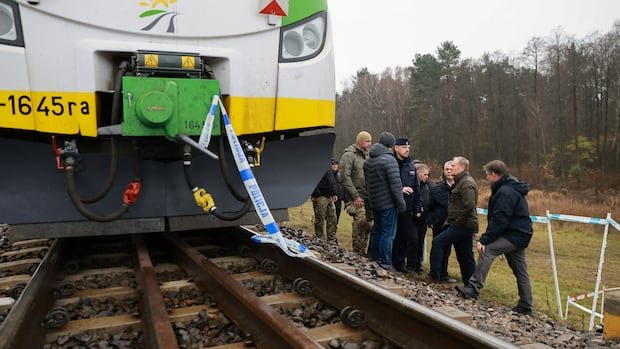

Poland revealed an explosion damaging a railway track to Ukraine, calling it an unprecedented act of sabotage for catastrophe. Authorities identified two Ukrainian suspects with Russian intelligence backing who fled to Belarus. In response, Poland closed Russia’s last active consulate in Gdansk and deployed 10,000 troops to safeguard vital infrastructure. The country’s proximity to Ukraine, with a shared border of over 500 kilometers, has exposed it to spillovers from Russia’s invasion, such as Russian drones breaching Polish airspace.
European officials are grappling with countering what is seen as an escalating Russian shadow war aimed at disrupting Ukrainian allies without provoking a stronger reaction. Moscow denied involvement in the railway explosion, dismissing Warsaw’s accusations as “Russophobia.” The Kremlin highlighted the ongoing investigation into the 2022 Nord Stream pipeline blast involving a former Ukrainian military officer.
Numerous sabotage incidents across Europe, allegedly orchestrated by Russian intelligence, have been reported. Recruitment of individuals via social media for carrying out attacks has been observed following the expulsion of Russian agents post the Ukraine invasion. These covert operations, aimed at being deniable, pose a challenge for retaliatory actions due to plausible deniability.
Schuurman’s database documents incidents linked to Russian agents, ranging from arson to sabotage. The report from the Center for European Policy Analysis describes Russia’s shadow warfare as a Soviet-era strategy to intimidate the West and weaken support for Ukraine. Recent serious plots include attempted parcel bombings in Europe and arrests made in connection with planned explosive deliveries to Ukraine.
While NATO has increased surveillance in response to these threats, experts emphasize the need for a cohesive approach toward Moscow. Establishing a unified political framework to address these operations collectively is crucial. Enhancing defenses around critical infrastructure sites and establishing clear response thresholds are recommended. The absence of a realistic deterrent poses a challenge in confronting Russia’s aggression without escalating tensions further.