


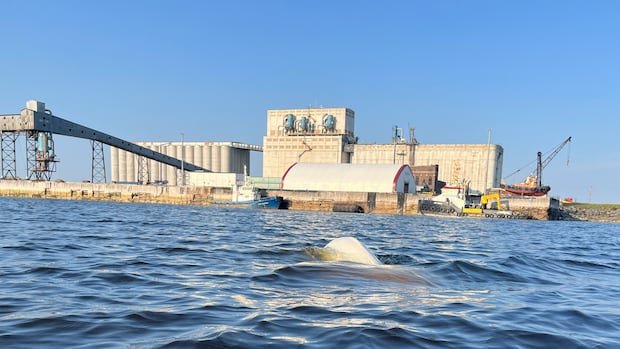

The University of Manitoba and the Arctic Research Foundation are embarking on a critical stage of a research initiative to explore the viability of transforming Churchill into a year-round maritime center. The current assessment, initiated in January, focuses on evaluating the use of icebreakers to extend the operational timeframe of the port beyond its existing four-month window.
Feiyue Wang, the Canada Research Chair in Arctic Environmental Chemistry and director of the Churchill Marine Observatory, emphasized the necessity of ice-breaking support to maintain shipping routes open during winter months. The study aims to establish the optimal navigational window and route for shipping goods to the Atlantic Ocean and northern Europe, involving the mapping of over 2,000 kilometers.
Prime Minister Mark Carney highlighted the significance of expanding the Port of Churchill as a key element of a trade corridor in northern Manitoba during discussions with Manitoba Premier Wab Kinew. The project, led by Wang and researchers from the U of M’s Centre for Earth Observation Science, is funded with $188,000 from a larger commitment of $750,000 in federal and provincial funding dedicated to assessing sea ice and climate conditions in the Hudson Bay region.
With Hudson Bay experiencing a temperature rise of approximately 1°C over the past forty years, researchers will analyze historical and projected sea ice conditions to anticipate future icebreaking needs. The Polar Operational Limit Assessment Risk Indexing System (POLARIS) will be employed to assess ice conditions for different ship classes, alongside climate model projections under varying greenhouse gas emission scenarios.
The study also incorporates considerations for ecologically sensitive periods of the year, such as the convergence of 55,000-60,000 beluga whales in western Hudson Bay and the Churchill River estuary annually. The potential extension of the port’s operating season is seen as a beneficial move for the Canadian economy, facilitating access to Arctic resources and promoting domestic processing of natural resources.
Arctic Gateway Group CEO Chris Avery emphasized that increased trade through the Port of Churchill will enhance Canada’s supply chains and boost the export of western Canadian resources. The project is intended to drive economic development in Arctic communities while prioritizing environmental sustainability and consultation with local residents.
The final study report is scheduled for submission by February 2027, following which field testing with research vessels will be conducted before considering the deployment of large icebreakers to support year-round shipping operations.