


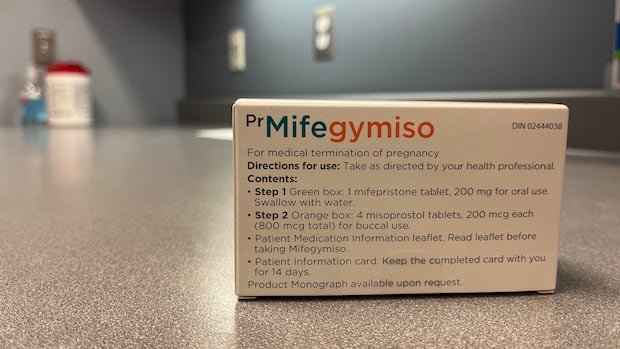

Following the relaxation of restrictions on the medical abortion pill in Quebec, the province witnessed a nearly 80% surge in usage in 2025, as per data from the Quebec public health insurance board, RAMQ.
In 2025, a total of 2,852 women were reimbursed for utilizing Mifegymiso, up from 1,586 in 2024. This medication enables individuals to undergo abortion naturally, eliminating the necessity for a surgical procedure.
Dr. Diane Francoeur, OBGYN and CEO of the Society of Obstetricians and Gynaecologists of Canada, mentioned that Mifegymiso has been globally utilized for years, highlighting Quebec’s previous regulatory obstacles in its adoption.
The province only lifted several requirements related to the drug in 2022, significantly enhancing its accessibility.
Despite the increase in medication abortions, experts clarify that overall abortion rates in Quebec remain stable. The rise in prescriptions for the abortion pill is deemed positive due to its safety and easier availability.
Quebec’s Progress Compared to Other Provinces
Dr. Mathieu Bélanger, an obstetrician-gynecologist at the CHU de Québec-Université Laval hospital, emphasized that Quebec has been lagging behind other provinces in Canada in terms of adopting the abortion pill.
Since Health Canada’s approval of medication abortion in 2015, Quebec initially adhered to stringent prescribing rules that were swiftly abandoned by most regions in the country, according to Jess Legault, the general co-ordinator of Quebec’s family planning organization (FQPN).
Legault pointed out that Quebec’s adherence to mandatory training for procedural abortions and ultrasound requirements impeded wider prescription of medical abortions, lacking scientific basis for such restrictions.
The FQPN, alongside other advocacy groups, pressured the Quebec College of Physicians to enhance the pill’s availability, especially post the U.S.’s Roe V. Wade overturn.
In recent years, the government implemented a plan to improve abortion access in Quebec, focusing on regional access, combating misinformation, contraception education, and research promotion.
Currently, the abortion pill can be prescribed by doctors, specialized nurse practitioners, and midwives, sometimes through telemedicine, contributing to the increased usage.
Dr. Francoeur highlighted that apart from traditional abortion purposes, the pill is increasingly being used by women experiencing fetal growth cessation in the womb, providing an alternative to surgical intervention.
While the rise in medication abortions is encouraging, it is crucial to maintain a balance between medication and procedural abortion services, ensuring timely and comprehensive care for all women in need.