


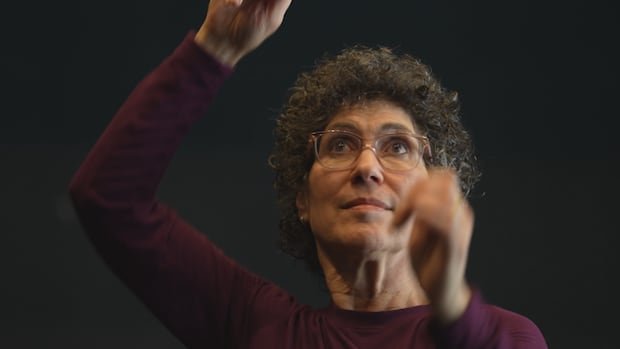

Barbara Salsberg Mathews, despite her long-time passion for dancing, discovered a newfound determination to engage in dance classes a few years back. Diagnosed with Parkinson’s disease in 2020, she felt compelled to dance as a way to defy the limitations imposed by the condition. As Parkinson’s symptoms such as muscle weakness and stiffness took hold, the 67-year-old found solace in dance, which allowed her to reconnect with her sense of self.
Immersing herself in the rhythm of the music, Salsberg Mathews experienced a sense of liberation, witnessing a resurgence in the fluidity and range of her movements. Studies indicate that dance can potentially decelerate the progression of Parkinson’s disease, prompting experts to introduce a national online arts platform in Canada. This initiative aims to unite Parkinson’s patients from various regions through diverse programs, including singing and dancing.
Heading the launch of the online arts hub is Rebecca Barnstaple, an assistant professor of theatre at the University of Guelph. She envisions leveraging activities like dance to enhance the well-being of individuals grappling with neurodegenerative conditions. Barnstaple’s project aligns with the broader concept of social prescribing, emphasizing the utilization of social initiatives to bolster overall health and address healthcare system gaps.
The current Parkinson’s landscape in Canada paints a concerning picture, with over 110,000 individuals living with the disease, a number projected to surpass 150,000 within a decade. Dr. Alfonso Fasano, a neurologist at the University Health Network in Toronto, anticipates Parkinson’s becoming the most prevalent neurodegenerative disorder in the near future. Recognizing the prolonged wait times for Parkinson’s patients to access specialized care in Canada, Barnstaple aims to empower them through dance, a practice she has been advocating since 2013, citing its transformative impact on balance, mobility, and functional movements.
Parkinson’s disease, characterized by a progressive deterioration of dopamine levels in the brain, manifests through various symptoms like tremors, muscle rigidity, and cognitive impairment. Physical exercise has long been recommended to mitigate these effects, with aerobic activities particularly beneficial. Fasano emphasizes the significance of dance in motivating individuals to engage in physical activity, citing its potential to slow disease progression by raising heart rates.
Dance, with its emphasis on coordination and balance, offers unique mental benefits beyond conventional exercises. Recent studies by Joseph DeSouza, an associate psychology professor at York University, underscore the cognitive enhancements and stability improvements observed in Parkinson’s patients engaging in dance classes regularly. The multifaceted benefits of dance, ranging from the impact of music to the positive social interactions fostered in classes, contribute to alleviating depression and enhancing mood.
As the popularity of dance classes for Parkinson’s patients surges nationwide, individuals like Ken Wickens in Windsor, Ont., are embracing these opportunities for movement and social engagement. Wickens, who has lived with Parkinson’s for over a decade, values the sense of participation and connection these classes offer. Researchers emphasize the therapeutic value of human interaction, highlighting the upcoming launch of Barnstaple’s project in April as a potential avenue for more individuals to experience the healing power of community.