


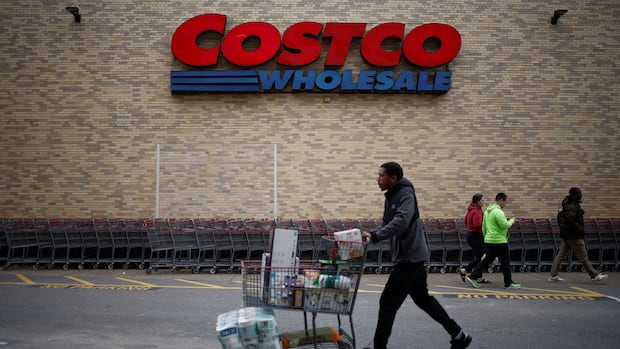

Costco has joined a lawsuit against the U.S. government to secure reimbursement for tariffs it has been obligated to pay, contingent upon the U.S. Supreme Court dismissing President Donald Trump’s claim of extensive authority to levy tariffs.
The warehouse club, which operates on a membership basis and offers a wide range of products from groceries to electronics, submitted its complaint on Friday at the U.S. Court of International Trade located in Manhattan. The complaint argues that Trump’s invocation of the International Emergency Economic Powers Act to enforce tariffs has created uncertainty regarding businesses’ abilities to recover amounts they should not have incurred.
Brent Skorup, a legal fellow at the libertarian Cato Institute, informed The Associated Press, “It’s uncertain whether refunds will be granted and, if they are, how much will be returned.” This uncertainty has led many businesses to initiate proceedings in the trade court to “get in line, so to speak, for potential refunds.”
Trump maintains that he possesses nearly limitless authority to impose tariffs, a power constitutionally assigned to Congress under the 1977 International Emergency Economic Powers Act (IEEPA). However, he has recently lost this argument twice in court.
Costco Wholesale has sued the Trump administration before the U.S. Court of International Trade to ensure it will receive a refund for tariff fees, and asked the court to find Trump’s use of the International Emergency Economic Powers Act to impose tariffs unlawful. Do they have a case?
According to trade lawyer Tim Meyer, if Trump ultimately loses in the Supreme Court and the tariffs are deemed illegal, Costco would have a robust case for a refund before the U.S. International Trade Court.
The focus of the case would shift to the amount Costco paid and whether it adhered to the necessary legal procedures to claim a refund, Meyer explained to CBC’s Sarah Galashan from Durham, N.C. “Do they have the appropriate records and have they done the appropriate administrative steps necessary to claim a refund?”
In its court filing, Costco asserted its demand for immediate reimbursement to protect its “right to a complete refund.”
The company raised concerns regarding its ability to secure a refund once the tariff amounts have been liquidated by U.S. Customs and Border Protection, a process Costco indicated is set to begin on December 15.
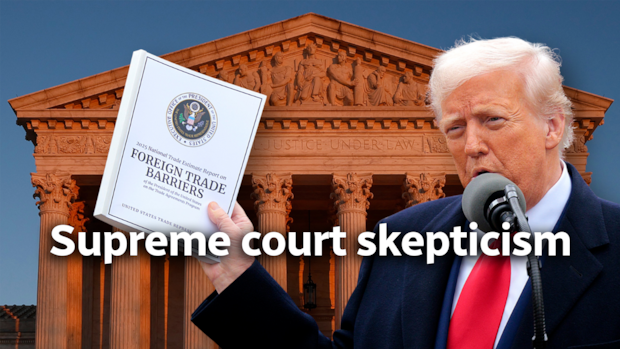
Has Congress given the U.S. president the power to impose tariffs through the International Emergency Economic Powers Act? Andrew Chang unpacks the arguments for and against the use of the statute. Plus, how China uses its buying power as a weapon.
With a revenue of $275.2 billion for the fiscal year ending August 31, Costco adds significant weight to the numerous other companies also pursuing lawsuits to protect their potential refunds.
Other plaintiffs in the lawsuits include Bumble Bee Foods, EssilorLuxottica (the maker of Ray-Ban glasses), Kawasaki Motors, Revlon, and Yokohama Tire, according to court documents.
Meyer, who also teaches international business law at Duke University, stated to CBC that if Costco prevails, it could encourage more companies to file similar lawsuits.
“We’re likely to witness a surge of lawsuits seeking billions of dollars in refunds.”
During the oral arguments held on November 5, justices from both political factions at the Supreme Court posed doubtful questions regarding the legality of Trump’s use of the 1977 emergency powers statute to impose tariffs.
The justices have expedited the case but have not indicated when a ruling will be issued.
Costco has implemented several measures in response to tariffs, such as decreasing the number of suppliers and increasing reliance on local sourcing as well as its proprietary Kirkland brand.
U.S. President Donald Trump rolled back tariffs on dozens of food products, as concerns over grocery costs rise. The exemptions took retroactive effect on Thursday at midnight.