


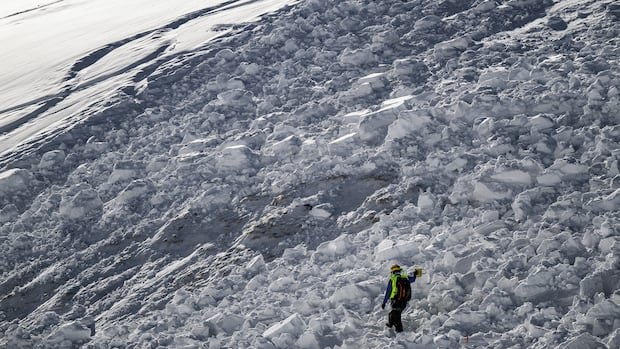

In February, fatal avalanches occurred in British Columbia, Alberta, California, and Utah, with a significant incident in which nine lives were lost. Across Europe, including Andorra and Slovakia, the season has witnessed 125 avalanche-related deaths thus far.
These events underscore the constant danger associated with backcountry activities, even for experienced individuals equipped to handle avalanche risks. The unpredictability of avalanches poses a significant challenge in terms of forecasting when they might occur.
Experts interviewed by CBC News shed light on how avalanches form, the complexities of prediction, and the potential impact of climate change on their severity. Simon Horton from Avalanche Canada described an avalanche as a swiftly moving mass of snow, emphasizing the necessity of a strong layer over a weak layer to trigger an avalanche.
Ethan Greene of the Colorado Avalanche Information Center highlighted the dynamic nature of snow and ice, explaining how various factors contribute to the stability or instability of a snowpack. Nicolas Eckert, a researcher specializing in mountain risks, detailed how snowpacks evolve with each weather event, influencing avalanche conditions.
Avalanches come in different forms, ranging from loose sluffs to heavy, cohesive slabs, each type requiring specific triggers. The experts identified slab avalanches as particularly hazardous due to their cohesive nature and potential for mass movement down slopes.
Despite advancements in data collection, predicting avalanches remains a challenge due to the unique characteristics of snowpacks in different locations. Forecasting, as Horton described, involves a blend of art and science, often relying on historical patterns and interpretations of snowpack structures.
Regarding climate change, experts suggest a potential link to avalanches, citing the impact of warming temperatures on snow conditions. The intricate relationship between climate change and avalanche risk is complex, with variations in precipitation patterns and snow accumulation playing crucial roles.
In conclusion, while the effects of climate change on avalanches are not fully understood, experts emphasize the importance of proper preparation, including checking local forecasts, obtaining the necessary gear, and undergoing avalanche safety training before engaging in backcountry activities. Additionally, establishing clear communication and decision-making protocols within groups can help mitigate risks associated with unpredictable avalanche events.