


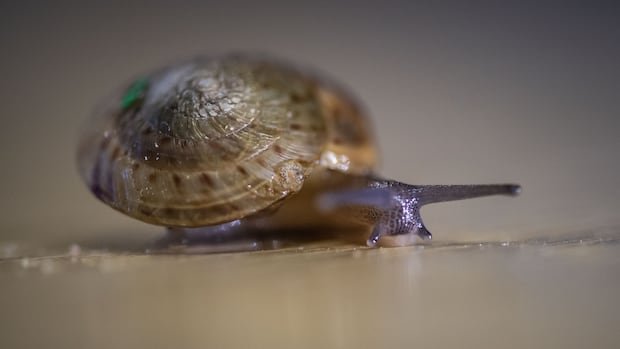

A full interview with invertebrate zookeeper Katie Kelton reveals the successful conservation efforts that have saved the greater Bermuda land snails from extinction. A decade ago, the last-known population of these snails was found in Hamilton’s alleyway, taking refuge on concrete slabs near a dripping air conditioner. Today, these native creatures are thriving in the wild once more, with over 10,000 of them released into Bermuda’s protected wooded areas in the past seven years.
Katie Kelton, from Chester Zoo in the U.K., expressed delight at the snails’ progress, highlighting confirmed breeding and increasing numbers as signs of success. The collaborative project involving Chester Zoo, Biolinx Environmental Research in Canada, and the Bermuda government will be documented in an upcoming issue of Oryx, The International Journal of Conservation.
However, the snails still face threats from habitat loss and invasive predators, challenges that once pushed them to the brink of extinction. Despite being small in size, these snails play a crucial role in Bermuda’s ecosystem by aiding in decomposition and providing calcium for native birds and reptiles.
Recognized as critically endangered by the IUCN, the snails were nearly wiped out due to human activities and the introduction of invasive species. Their recent reintroduction to secure habitats marked a significant conservation milestone, celebrated during the Reverse The Red Day by the IUCN.
Kelton emphasized the dedication required to breed and reintroduce the snails successfully, acknowledging the ongoing need for vigilance to safeguard the colonies’ survival. While some reintroduction sites have seen successful breeding and expansion, challenges remain in ensuring the long-term security of these vulnerable species.
Overall, the conservation efforts have been a labor of love for the dedicated team involved, with Kelton expressing gratitude for the opportunity to contribute to saving a species often overlooked by many.