


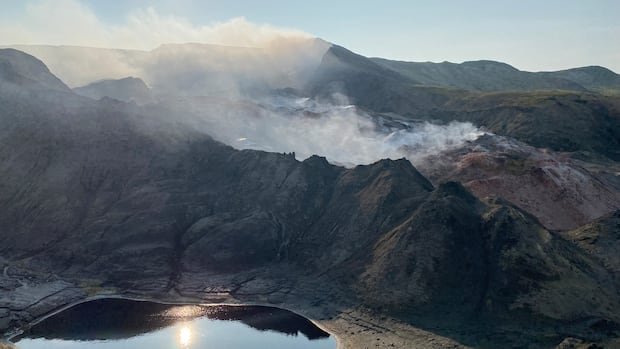

Calgary scientists have identified some of the most acidic natural water on Earth in the Northwest Territories. This discovery is attributed to climate change, causing permafrost thawing and land erosion from the Smoking Hills Formation. The resulting leakage of toxic metals and highly acidic substances into nearby water bodies, including rivers and potentially the Arctic Ocean, has raised concerns.
Research scientist Stephen Grasby from the Geological Survey of Canada visited the site in the territory’s north shore in 2017 and 2023, noting the significant levels of toxicity and acidity in the ponds surrounding the Smoking Hills. Grasby expressed awe at the destructive and creative powers of nature, highlighting the unprecedented levels of toxic acidic waters surpassing those found in industrial settings.
The origin of this environmental phenomenon can be traced back to 85 million years ago when pyrite, also known as “fool’s gold,” trapped toxic metals in iron sulfide minerals beneath the surface. With the recent exposure of pyrite to oxygen due to increased slumping, a surge of heat and metal release into the water bodies has ensued. Grasby observed a remarkable transformation in the landscape between his visits, with the ponds turning black and exhibiting oil-like consistency, making it challenging to measure their extreme pH levels accurately.
Unprecedented negative pH values were recorded, surpassing the limits of conventional pH meters. Additionally, evidence of melted rocks suggested temperatures exceeding 1,200 degrees Celsius just below the surface layer, creating a hazardous environment akin to lava flows. The thawing permafrost, driven by climate change, has further exacerbated the situation, with far-reaching implications for water quality.
Elliott Skierszkan from Carleton University emphasized the urgent need to study the impact of permafrost thaw on water quality, especially in the North where the consequences are only beginning to be understood. Concerns linger regarding the potential environmental effects of the toxic metals leaching into other water bodies, with reports of rivers in Alaska and northern Canada turning orange due to metal contamination.
The researchers stress the necessity for more in-depth investigations to unravel the complexities of the Smoking Hills and the repercussions of climate change on this fragile ecosystem. Their findings aim to raise awareness and spur further research efforts to safeguard the pristine Arctic environment from escalating environmental threats.