


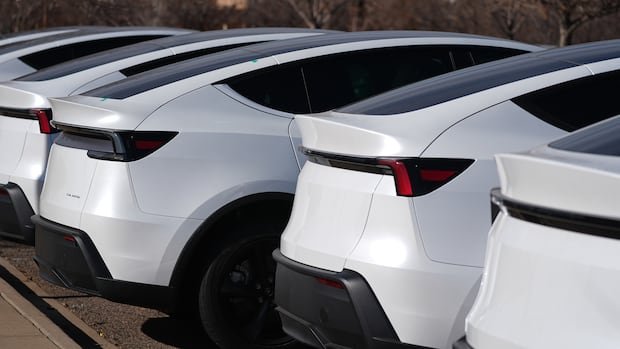

Tesla’s reign as the top-selling electric vehicle (EV) manufacturer ended when a decline in sales, driven by customer dissatisfaction with CEO Elon Musk’s political views and increased competition abroad, led to a second consecutive year of reduced deliveries. In 2025, Tesla reported a decrease in vehicle deliveries to 1.64 million, marking a nine percent drop from the previous year. This allowed Chinese competitor BYD, with 2.26 million vehicle sales in the same period, to claim the title of the world’s largest EV maker.
During the fourth quarter, Tesla’s sales reached 418,227 units, falling short of the 440,000 anticipated by analysts surveyed by FactSet. The decrease in sales could be attributed in part to the conclusion of a $7,500 US tax credit phased out by the Trump administration in September. Despite facing various challenges, Tesla’s stock experienced an approximately 11 percent increase by the end of 2025, with investors banking on CEO Musk’s vision to establish Tesla as a pioneer in robotaxi services and promote the adoption of humanoid robots for basic tasks in residential and commercial settings.
Prior to the market opening on Friday, Tesla’s stock saw a nearly two percent rise.