



The federal government is looking to acquire the authority to invalidate visa applications for groups of visa holders, citing concerns of fraudulent activities from India and Bangladesh as per internal documents acquired by CBC News. A departmental presentation to the immigration minister’s office highlighted that Immigration, Refugees and Citizenship Canada (IRCC), the Canada Border Services Agency (CBSA), and undisclosed U.S. partners are collaborating to detect and annul deceptive visitor visa applications.
The Canadian agencies and U.S. partners established a working group to enhance capabilities to reject and annul visas, pinpointing India and Bangladesh as facing “country-specific challenges.” The presentation outlined potential scenarios for utilizing mass cancellation powers, such as during a pandemic, war, or concerning “country-specific visa holders.”
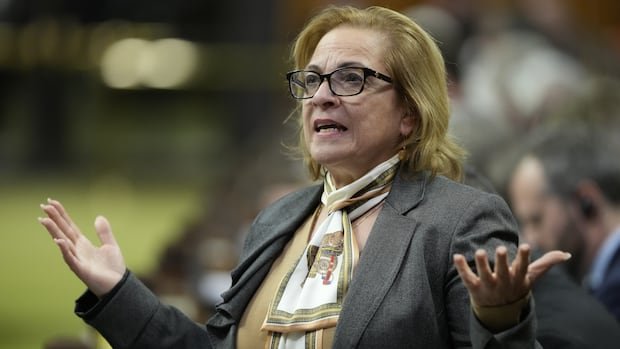
Publicly, Immigration Minister Lena Diab emphasized reasons like a pandemic or war for seeking these powers, omitting mention of country-specific visa holders. The presentation sheds light on Ottawa’s rationale for pursuing these mass cancellation powers.
The proposal was introduced in Parliament as part of Bill C-2, the comprehensive border legislation, which has now been split into two bills, with mass visa cancellation incorporated into C-12, aiming for swift approval by the government.
Over 300 civil society groups have voiced apprehensions regarding the legislation, with some, including the Migrant Rights Network, expressing concerns that group cancellations could enable the government to establish a “mass deportation machine.” Immigration lawyers have also questioned if the mass cancellation authority is being sought to address the increasing backlog of applications.
The presentation disclosed a surge in asylum claims from Indian nationals, from less than 500 monthly in May 2023 to about 2,000 by July 2024. It indicated that the verification of temporary resident visa applications from India has slowed down application processing, leading to extended processing times and declining approval rates.
The document also highlighted a rise in individuals barred from boarding airplanes in India, with a significant number identified for further investigation and legal proceedings. Information regarding claims from Bangladesh was not provided in the document.
In response to queries, IRCC emphasized that the new powers were not targeted at specific groups or situations and decisions would not be unilateral. Another document urged the immigration minister to advocate for additional visa cancellation powers without specifying any particular countries.
The department informed that they have implemented measures to reduce unnecessary border traffic, enhance information sharing, and curb non-genuine visitors and illegal border crossings. These actions have resulted in a substantial decrease in illegal crossings into Canada and a decline in asylum claims and visa refusals for fraud.
While seeking these powers, the government has also been working to mend relations with India, which had been strained since 2023. Indian Prime Minister Narendra Modi’s visit to Canada in June during the G7 summit marked a positive step towards revitalizing bilateral relations.
Global Affairs has not responded to inquiries regarding the potential impact of the sought powers on Canada-India relations.