



Welcome to our weekly newsletter focusing on environmental trends and solutions driving us towards a more sustainable world. Hi, it’s Anand. Today, we explore alternative practices in dealing with human remains to promote environmental sustainability.
This week’s highlights include examining the eco-friendliness of liquified and composted death practices, the rise of floating solar farms, and the advocacy for waste pickers to receive deposits on more materials.
Sam Sieber’s family has been pioneering Aquamation for over two decades, a process using water to break down bodies swiftly without emitting carbon. Contrary to assumptions, families opt for Aquamation not solely for its environmental benefits but also as a unique alternative to traditional cremation.
In Aquamation, an alkaline hydrolysis process occurs within an industrial steel drum, dissolving the body with water, heat, pressure, and alkaline chemicals, leaving behind only bones. Advocates tout its lower energy consumption, increased remains, and zero airborne emissions. Additionally, the process allows for the recovery of implants like titanium hips, promoting recycling and reuse.
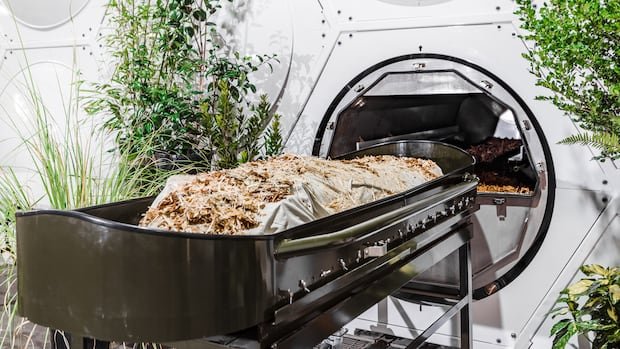
In another innovative approach, Recompose offers human composting legal in 14 U.S. states, aiming to create soil from bodies and plant materials within months. This method emphasizes a personal connection to the Earth, with the potential for recovered implants and reduced carbon emissions from cremation.
While these practices are not yet widely adopted, they signify a shift towards eco-conscious choices in end-of-life arrangements. Initiatives like Recompose’s composting and Aquamation present environmentally friendly alternatives for individuals looking to reduce their impact even after death.
Environmental experts caution about potential hazards from liquid remains in sewers and the presence of infectious materials in composted remains. Despite these concerns, the momentum towards greener death practices reflects a broader movement towards sustainability and conscious environmental impact posthumously.
For more insights on alternative death practices and their environmental implications, contact us at whatonearth@cbc.ca.
Remember to stay tuned for our next newsletter every Thursday. Thank you for reading!
– Editors: Emily Chung and Hannah Hoag