


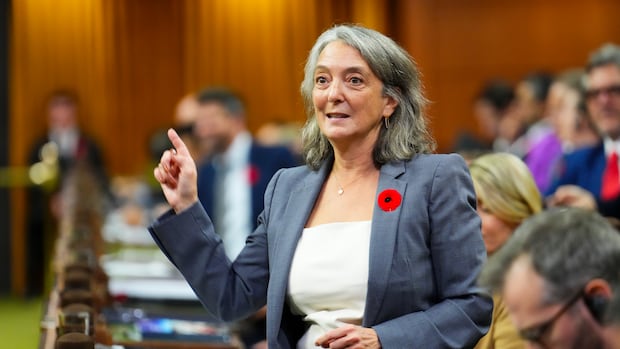

Officials from Canada’s Environment and Climate Change department, along with the newly appointed environment minister, have affirmed that the federal government remains committed to the national climate objectives established under former Prime Minister Justin Trudeau.
Environment and Climate Change Minister Julie Dabrusin faced multiple inquiries regarding the current Liberal administration’s dedication to the short-term targets outlined by the previous government, particularly concerning the emissions goal for 2035.
Canada has pledged to achieve a minimum reduction of 45 percent in greenhouse gas emissions compared to 2005 levels by that date.
“Our targets stay unchanged. We always recognized that these are ambitious goals, right? So it was always going to be a challenge. But that’s the essence of having ambitious targets — it compels us to strive for that,” Dabrusin recently expressed during a CBC environment and climate change podcast, What on Earth.
When further questioned on whether the Carney administration endorses the previous government’s emissions reduction objectives, the minister responded, “That’s correct. Those are the targets for our country.”

Can Canada balance the fight against climate change with fossil fuel extraction? That seems to be the aim in Prime Minister Mark Carney’s initial budget. However, Climate Minister Julie Dabrusin asserts that Canada still has credibility in the battle to reduce emissions as she prepares for the UN’s climate conference in Brazil. Following this, we delve into the stakes as nations convene in the Amazon rainforest for COP30 and explore what climate leadership will entail in 2025.
On Monday, Prime Minister Mark Carney reaffirmed his support for the climate targets during the announcement of his “Buy Canadian Plan.”
These statements represent a significant moment as Carney and his environment minister have openly endorsed Canada’s existing climate targets.
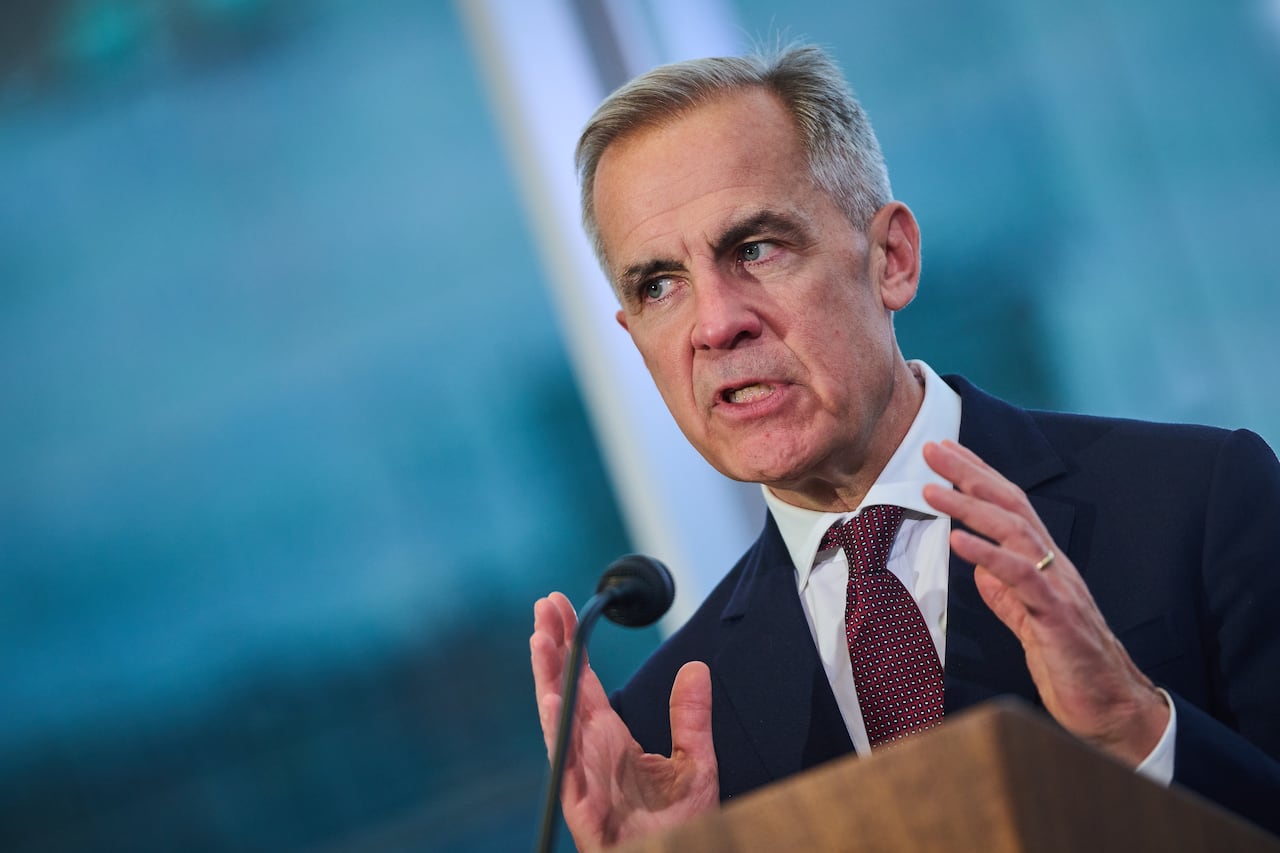
Prime Minister Mark Carney addressing the audience at the Vector artificial intelligence research institute in Toronto on Friday. (Sammy Kogan/The Canadian Press)
Previously, both Dabrusin and Carney had provided vague statements, and their latest Climate Competitiveness Strategy did not reference the targets. The omission of the near-term targets led some to speculate that Canada might be retreating from its climate commitments.
On Friday, staff from Environment and Climate Change Canada conducted a media briefing in advance of the ongoing United Nations Climate summit, COP 30, in Brazil. The officials provided background information, and journalists were not allowed to attribute the comments to specific individuals, but they echoed the government’s statements.
One official mentioned that the 2035 target — initially announced in December, shortly before Trudeau’s departure — was submitted to the United Nations, and “we [the government] uphold that.”
“The government has clearly indicated that this represents a pathway, and that our net-zero commitment by 2050 is the ultimate goal. We are actively working towards that,” the official informed reporters.
Climate targets not a pass or fail
Climate targets are frequently perceived as a binary pass or fail assessment, but climate researchers and policymakers are increasingly advocating for a different perspective, emphasizing that any progress is preferable to none.
This concept was highlighted in a recent report from the Canadian Climate Institute, which concluded that Canada is likely to fall short of its 2030 climate target. However, it also noted that the overall findings should be viewed as guideposts that enable nations to adjust their strategies.
This year’s COP 30 summit commemorates a decade since nations agreed to the pivotal 2015 Paris Agreement. Under this climate treaty, countries committed to keeping global warming to “well below” 2 C compared to pre-industrial levels, while aspiring to limit it to 1.5 C.
An official from Environment and Climate Change Canada noted that nearly 200 nations, including Canada, have submitted updated national climate plans, which, if fully enacted, would decrease the anticipated increase in global temperatures from 4 C to below 3 C.
While this still falls short of the Paris Agreement goals and entails serious repercussions, it keeps progress achievable.