


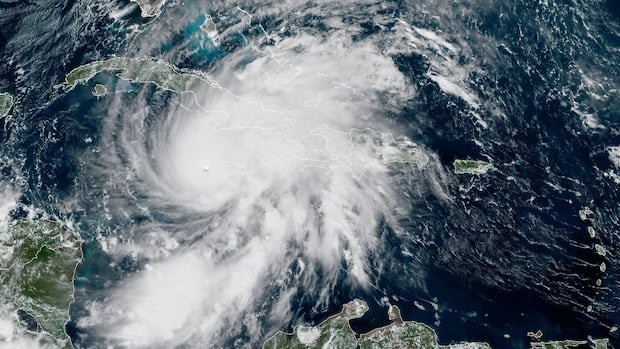

Millions of individuals throughout the Caribbean are grappling with the severe impacts of Hurricane Melissa, which swept through the area this week. Melissa, like many recent storms, experienced rapid intensification, characterized by a significant increase in maximum sustained wind speed within a 24-hour period.
The storm escalated by 112 km/h during this timeframe, marking an instance of what some are describing as extreme rapid intensification. The continuous burning of fossil fuels, leading to the emission of CO2 into the atmosphere, is contributing to the ongoing warming of the planet, resulting in various alterations in weather patterns and the broader climate.
The role of climate change in Hurricane Melissa was a subject of inquiry. Scientists are enhancing their ability to assess the impact of climate change on extreme weather events such as droughts, floods, and hurricanes. Various organizations, including Environment and Climate Change Canada and ClimaMeter, a group of global climate scientists, conducted analyses on Hurricane Melissa’s rapid attribution.
Their findings indicated that climate change and natural variability both played roles in the storm’s development. In particular, it was revealed that hurricanes akin to Melissa are approximately 10% wetter and windier than in the past due to climate change influences. The primary factor linking climate change to hurricanes is the warming of oceans, which serve as fuel for these storms. The elevated ocean temperatures, currently 1.4°C to 2°C warmer than average in the Caribbean Sea, significantly amplify hurricane intensity.
According to meteorologist Shel Winkley from Climate Central, the abnormal warmth in the Caribbean Sea is largely attributable to human-induced excess heat in the atmosphere seeping into the ocean. This phenomenon contributes to rapid intensification, as observed in several recent hurricanes within the Atlantic Basin.
Another independent analysis by Imperial College London’s Grantham Institute using the Imperial College Storm Model (IRIS) indicated that climate change led to a 7% increase in Melissa’s wind speed, equating to approximately 18 km/h. Despite the focus on rapid intensification, experts emphasize the critical impact of hurricanes like Melissa well before landfall, underscoring the severity of such storms and their potential for widespread damage.
The analysis further highlighted that the likelihood of such extreme hurricane events has quadrupled compared to pre-industrial times. The authors emphasized that without climate change, the resulting destruction from a weaker hurricane would have been significantly lower. Overall, the consensus among rapid attribution groups remains clear: climate change is reshaping hurricanes, with a continued trajectory of warming oceans and heightened storm intensity.
Looking ahead, experts caution that while adaptation and resilience efforts are crucial, there are limits to preparing for the increasingly destructive force of Category 5 hurricanes. As greenhouse gas emissions persist, the warming of oceans will persist, perpetuating the destructive impacts of hurricanes on coastal communities.