


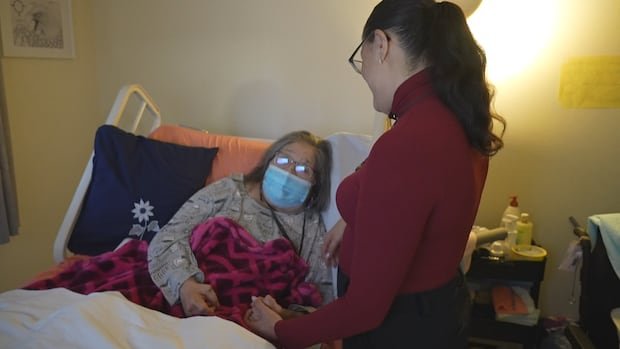

Joy SpearChief-Morris has been awarded the 2025 CJF-CBC Indigenous Journalism Fellowship, which aims to promote Indigenous perspectives and enhance understanding of Indigenous issues in Canadian media outlets. Patricia McCartney, a caregiver for her mother from Six Nations of the Grand River in southern Ontario, faced challenges accessing medical supplies through the federal Non-Insured Health Benefits (NIHB) program. Despite her mother’s eligibility for NIHB coverage, obtaining essential supplies like adult diapers and catheters involved significant hurdles, impacting her mother’s well-being.
Indigenous Services Canada reported that as of March 2025, over 983,000 First Nations and Inuit individuals were eligible for the NIHB program, with an annual government expenditure averaging $1.87 billion. McCartney struggled with the extensive paperwork and administrative processes required to secure coverage for her mother’s incontinence supplies, expressing frustration at the system’s inefficiencies.
Amy Lamb, Executive Director of Indigenous Pharmacy Professionals of Canada, highlighted the ethical dilemmas faced by pharmacists in delivering care to Indigenous clients under the NIHB program. Lamb emphasized the program’s low reimbursement rates and administrative complexities, leading some pharmacies to refuse billing to NIHB altogether. Additionally, the program’s requirement for clients to exhaust other insurance benefits first creates delays and underfunding issues.
David McLaren, President of the First Nations Health Managers Association, criticized the program’s cost-effectiveness focus, which limits access to newer treatments for clients. McLaren noted that many clients struggle to receive adequate reimbursement due to discrepancies in payment rates compared to other insurance plans. Calls for program reform include ensuring fairness and equitable care for Indigenous individuals, as advocated by McLaren and other stakeholders.
A parliamentary report in 2022 outlined 18 recommendations to address NIHB shortcomings, such as recognizing traditional healers, improving medical transportation criteria, and streamlining approval processes. Despite these proposals, Indigenous Services Canada did not confirm any actions taken in response to the recommendations. Concerns persist over the program’s administrative burdens and delays, prompting calls for urgent modernization to better serve Indigenous communities.
Caroline Lidstone-Jones, CEO of the Indigenous Primary Healthcare Council, highlighted challenges faced by remote communities in accessing NIHB services, citing internet connectivity issues. The AFN and the federal government have collaborated on a review to enhance the program since 2015, aiming to address systemic deficiencies and improve service delivery. Calls for a rights-based, culturally sensitive approach to healthcare underscore the need for fundamental program reform to support Indigenous well-being and reconciliation efforts.