


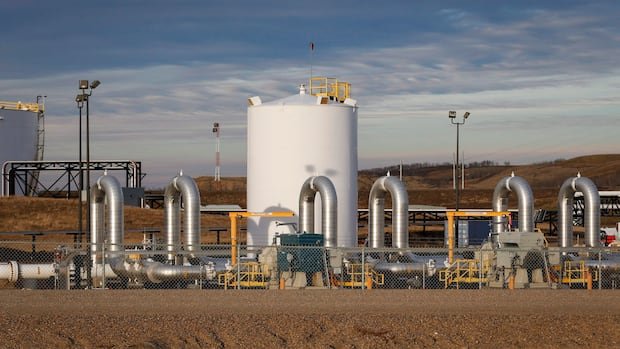

The U.S. Department of Justice has finalized an agreement with South Bow Corp, a pipeline company, concerning a rupture of the Keystone pipeline in 2022 that caused the release of around 13,000 barrels of oil in northern Kansas. As part of the settlement, the Calgary-based company will pay a civil penalty of $26.9 million related to Clean Water Act violations.
Additionally, South Bow has committed to investing approximately $40 million to undertake preventive measures to avoid similar incidents in the future. Moreover, the company will allocate $3 million for natural resource restoration initiatives in the state to address violations of state laws.
In a recent statement, the Justice Department highlighted that the spill was one of the most significant inland oil spills in recent times and the largest from the Keystone pipeline network, stretching from Hardisty, Alberta, to Port Arthur, Texas. Adam Gustafson, the deputy assistant attorney general, emphasized the importance of the company’s proactive efforts to prevent future leaks.
A satellite image displayed the extent of the crude oil spill along Mill Creek following the pipeline leak in Washington County, Kansas. The spill led to severe environmental damage, necessitating extensive cleanup and remediation efforts.
Jeffrey Hall, assistant administrator at the U.S. Environmental Protection Agency, stressed the criticality of proper pipeline maintenance in preventing such environmental disasters. He mentioned that the spill had devastating effects on the land and water, resulting in the loss of wildlife and requiring significant cleanup operations.
The Justice Department reported that the spilled crude oil covered Mill Creek bank-to-bank with a thickness exceeding two centimeters for a distance of 5.6 kilometers from the rupture site, leading to the harm or death of over 2,700 animals.
South Bow released a statement acknowledging their proactive response to the incident even before formal directives from U.S. authorities were issued. The cleanup operations were successfully completed by February 2024.
The company’s commitment to pipeline integrity and safety was further emphasized by South Bow spokeswoman Sara Hunter, who mentioned that extensive inspections and remedial work had been carried out on the Keystone system to enhance its reliability and safety measures.
Following the spill, TC Energy Corp., the pipeline’s previous owner, separated its oil pipeline operations, which were then transferred to South Bow in late 2024. The Keystone system has a history of spills, with a notable incident in April 2025 where an estimated 3,500 barrels spilled in North Dakota.
Looking ahead, South Bow aims to expand its cross-border crude pipeline system, with plans to repurpose unused pipe from the abandoned Keystone XL project for the Prairie Connector initiative. This project would connect to a proposed pipeline by Bridger Pipeline LLC, linking the Canada-U.S. border to Wyoming.