


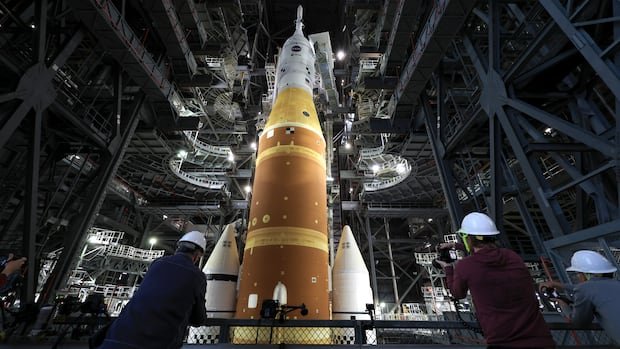

NASA’s Artemis II mission, initially scheduled for launch on February 8, has been postponed by at least a month due to a hydrogen leak discovered during tank fuelling. The first Artemis mission also encountered delays related to fuel leaks. Liquid hydrogen and oxygen, crucial components of rocket fuel, possess remarkable properties as they remain in liquid form despite being hundreds of degrees below freezing.
Liquid oxygen, with a boiling point of -183°C, appears as pale blue water when in liquid form, while liquid hydrogen, even colder at -253°C, is close to absolute zero. Handling these extremely cold liquids requires specialized equipment capable of withstanding the significant temperature difference between the fuels and the surrounding environment in Florida where the rockets are launched.
To ensure the fuel remains in liquid form, the core stage of the Space Launch System (SLS) rocket is coated with insulating foam to protect the cold fuel from the warm air. The fuel lines and tanks must also be pre-chilled to prevent freezing or cracking. Despite these precautions, the cryogenic fuel, like steam, generates pressure leading to leaks, especially with hydrogen, known for its ability to escape through small cracks.
The recent delay was caused by a leak from the connector linking the hose on the launch tower to the rocket side during a wet dress rehearsal. Engineers aim to address the leak at the launch pad to save time and resources, scheduling another rehearsal before the planned launch no earlier than March 6.
While hydrogen leaks have been a persistent issue in the space program, NASA continues to use it due to its high thrust-to-weight ratio. Private companies like SpaceX and the Russian space program have opted for kerosene or methane fuels, respectively, for easier handling. The SLS rocket’s reliance on liquid hydrogen and oxygen dates back to 1970s space shuttle technology, providing maximum thrust for heavy lift vehicles.
Critics argue that the SLS rocket’s high cost and disposable nature make it unsustainable compared to reusable rockets operated by private companies at lower costs. The future of the SLS rocket hinges on technological advancements to address hydrogen leaks while balancing the expense of operation with the preservation of related jobs.