


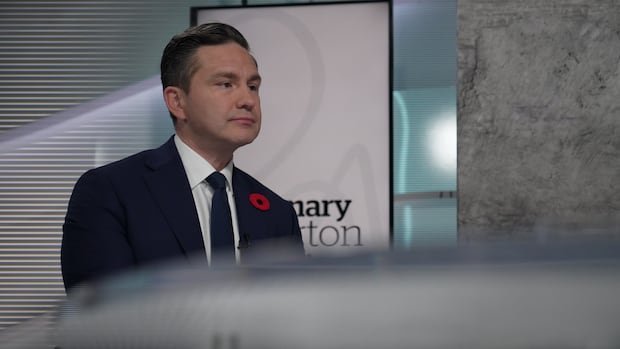

Conservative Leader Pierre Poilievre has expressed his intention to utilize the notwithstanding clause if elected to overturn the recent Supreme Court ruling that invalidated mandatory minimums for possessing or accessing child pornography. The Supreme Court’s decision, which deemed the one-year prison sentences unconstitutional, resulted in a 5-4 split among the judges and has faced criticism from various provincial and federal leaders.
In an interview with CBC News, Poilievre strongly criticized the ruling and emphasized his stance on introducing mandatory prison sentences for individuals found in possession of child pornography. He emphasized the need for harsh penalties to ensure offenders face significant consequences for their actions. The notwithstanding clause, outlined in Section 33 of the Charter, permits provincial or federal legislation to supersede specific Charter rights for a limited period.
The Supreme Court was prompted to assess an appeal from Quebec involving two distinct cases related to child pornography offenses. In both instances, the accused individuals admitted guilt to possessing numerous images of child abuse, with one case involving victims as young as three years old. The mandatory minimum sentences were contested on the grounds of potentially leading to disproportionately severe punishment, ultimately resulting in the Supreme Court’s ruling.
Justice Mary Moreau, writing for the majority, highlighted the diverse circumstances that could lead to convictions for child pornography offenses. Poilievre criticized the court’s decision, advocating for stricter penalties for such crimes. Dissenting voices, including justices Richard Wagner and Suzanne Côté, expressed their disagreement with the majority’s ruling, emphasizing the necessity for stringent sentences in cases of sexual offenses against minors.
The decision to strike down mandatory minimums adds to a series of similar cases where the Supreme Court has deemed such sentencing provisions constitutionally vulnerable. The Canadian Centre for Child Protection, acting as an intervenor in the case, acknowledged the ruling and emphasized the importance of recognizing the significant harm caused by child sexual abuse and exploitation material.
Various leaders, including Ontario Premier Doug Ford and Alberta Premier Danielle Smith, have called for the use of the notwithstanding clause in response to the ruling. The federal government, led by Prime Minister Mark Carney, is currently reviewing the implications of the decision while emphasizing the severity of crimes involving child exploitation.
The use of the notwithstanding clause at the federal level is unprecedented, although several provinces have previously invoked it. The debate surrounding the ruling underscores the complex intersection of legal interpretations and societal expectations in addressing crimes against children.