


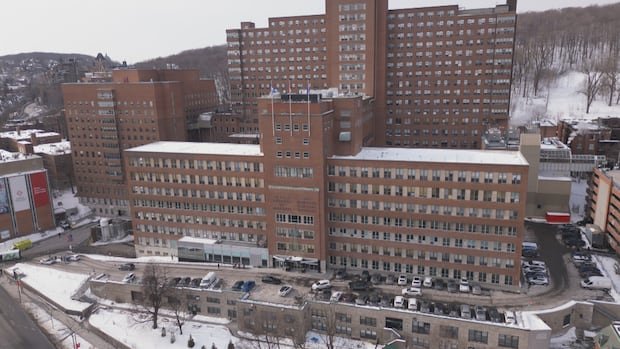

A recent evaluation of Quebec’s hospital system has uncovered a concerning reality: the condition of the province’s medical facilities is worse than previously disclosed, with the count of structures categorized as subpar more than doubling in the past year. According to updated information from Santé Québec and Radio-Canada’s analysis, 38% of Quebec’s 594 hospital buildings were classified as “poor” (rated D) or “very poor” (rated E) as of early 2026. The total number of deteriorating buildings surged from approximately 100 in early 2025 to 227 by the following year.
Consequently, the cost to rehabilitate the network has surged dramatically. The maintenance deficit for hospitals, which was approximately $900 million last year, has now exceeded $2 billion. Nearly half of the hospitals in dire need of repair in Quebec are in Montreal, with the Montreal General Hospital leading the list as the most deteriorated facility in the province.
Montreal is at the forefront of the issue, hosting nearly half of the most dilapidated hospitals in the province. The Montreal General Hospital, previously rated as “B” for good condition last year, has plummeted to an “E,” the lowest grade possible, signifying a “very bad” state of infrastructure. Colleen Timm, the executive director of the McGill University Health Centre (MUHC), described the situation as critical, citing 260 water leaks since the beginning of 2024, many adversely affecting patient care. Timm emphasized the urgent need for a complete overhaul of the building’s plumbing and electrical systems, estimating the maintenance deficit at $249 million.
While the Montreal General Hospital exemplifies the severity of the issue, it is not an isolated case. Other facilities in need of major repairs include the Douglas Mental Health Institute, the Hôtel-Dieu de Québec, and the Saint-Jérôme regional hospital, each requiring approximately $100 million in renovations. Sonia Dugas, the vice-president of finance at Santé Québec, expressed concern over the rapid deterioration of the network, attributing the spike in poor ratings to the long-overdue update of the province’s infrastructure data.
Dugas emphasized the necessity of prioritizing maintenance for existing buildings before embarking on new construction projects. Despite Santé Québec’s current $1 billion maintenance budget, Dugas acknowledged that the actual cost of essential repairs will likely surpass double that amount. Burst pipes at the Douglas Mental Health University Institute in Montreal recently caused significant damage to the research building, highlighting the impact of the cold weather and aging infrastructure on the healthcare facilities in the region.