


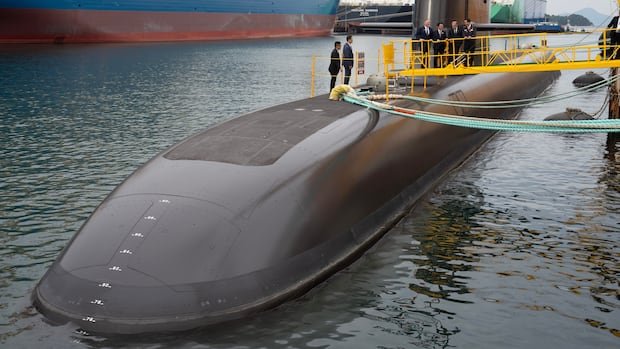

South Korea made a strategic push to secure a submarine deal with Canada, with Prime Minister Mark Carney visiting a shipyard to inspect one of South Korea’s new submarines. The visit to Hanwha Ocean Ltd. in Geoje, accompanied by South Korea Prime Minister Kim Min-seok, showcased the country’s efforts to sell the KSS-III (Batch 2) submarine to Canada. This move follows an unsolicited proposal submitted by Hanwha Ocean and Hyundai Heavy Industries to Canada last winter.
The tour highlighted the progress in building submarines, with one newly launched vessel displaying a Canadian flag and another under construction adorned with Korean and Canadian banners. The Koreans emphasized their capability to deliver four submarines to Canada by 2035, aligning with the Canadian Navy’s plan to retire its aging Victoria-class submarines.
During the visit, Defence Minister David McGuinty and Vice-Admiral Angus Topshee, along with Carney, explored the submarine and were impressed by its features. The government is moving swiftly towards a decision, with Germany’s ThyssenKrupp Marine Systems being the main competition for South Korea in the submarine bid.
German vs. South Korean Bidders
While Germany’s bid offers a longer timeline for submarine delivery, Canada is leaning towards a proposal that maximizes job opportunities for Canadians. The Defence Investment Agency (DIA) will oversee the submarine replacement program, with a focus on creating domestic job opportunities.
Despite suggestions of building submarines in Canada, officials like McGuinty and Topshee expressed the urgency of acquiring submarines without delay. The project’s budget is still under review, aiming to align with NATO’s defense spending targets and boost Canada’s defense capabilities.
Addressing Underspending Concerns
The submarine tour coincided with a report from the Parliamentary Budget Office highlighting underspending by the Trudeau government on defense equipment. The report raises concerns about meeting the NATO benchmark of five percent of GDP for defense spending, emphasizing the need for efficient management of procurement activities and domestic defense industry support.