


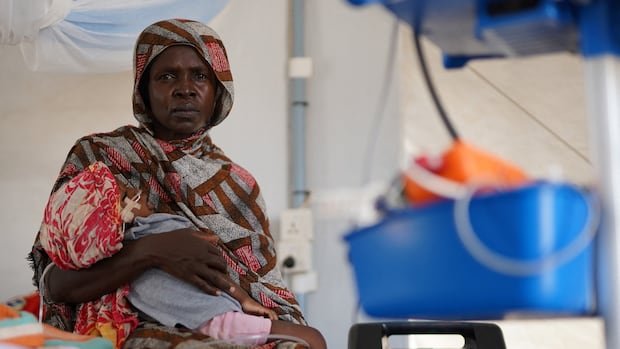

Sudan’s Rapid Support Forces (RSF) have accepted a humanitarian ceasefire proposal put forth by the United States and Arab nations and are willing to engage in discussions regarding a cessation of hostilities, according to a statement released on Thursday. Despite previous failed attempts, both the RSF and the Sudanese military have entertained various ceasefire initiatives over the course of their 2½-year conflict. The recent move follows the RSF’s capture of the besieged city of El Fasher in western Darfur, the final stronghold of the Sudanese military in the region, which occurred more than a week ago.
The RSF expressed its readiness to implement the agreement promptly and commence talks on the necessary arrangements for a cessation of hostilities and the core principles guiding the political process in Sudan. While the army-led Security and Defense Council recently convened to discuss the proposal, no definitive response was provided, with influential figures and allies within the army expressing disapproval.
An unnamed Sudanese military official disclosed that the army is supportive of the proposal but insists on a complete withdrawal of the RSF from civilian areas and relinquishing weapons in accordance with prior peace proposals before agreeing to a truce. Meanwhile, Massad Boulos, a U.S. adviser for African affairs, revealed ongoing efforts with both the Sudanese military and RSF to broker a humanitarian truce and hinted at an imminent announcement. Boulos outlined a proposed plan led by the U.S., suggesting a three-month humanitarian ceasefire followed by a nine-month political process.
The conflict between the RSF and the military originated in 2023 amid escalating tensions between the former allies tasked with overseeing a democratic transition post a 2019 uprising. The protracted warfare has resulted in the deaths of a minimum of 40,000 individuals and the displacement of 12 million, as per reports by the World Health Organization (WHO). However, humanitarian organizations believe the actual death toll could be significantly higher. The conflict has also left over 24 million people grappling with acute food insecurity, as indicated by the World Food Program.
Sudan has been plagued by a severe displacement crisis, with recent escalations following the RSF’s capture of El Fasher, leading to a surge in displaced individuals. Reports have emerged, suggesting that the RSF engaged in killings and abductions during and after the city’s fall, prompting international alarm. Witnesses and the U.N. human rights office have documented alleged executions of civilians and unarmed combatants during the takeover, categorized as war crimes.
Islamic Relief has issued a warning regarding the precarious state of community kitchens that serve as a crucial lifeline for many families, highlighting a survey indicating that 83% of households in east and west Sudan are currently facing food shortages. The situation has been exacerbated by conflict, insecurity, restricted food access, and the absence of humanitarian corridors. AbdulHakim Elwaer, the regional representative for Near East and North Africa, emphasized the urgent need to establish safe humanitarian passages to ensure essential aid reaches communities in need to avert a worsening humanitarian crisis.
Capturing the gravity of the situation, the famine in El-Fasher and Kadugli has been attributed to human actions rather than natural calamities. Elwaer expressed optimism regarding ongoing discussions aimed at facilitating aid delivery and stressed the imperative of finding a swift resolution to prevent widespread hunger-related fatalities.