


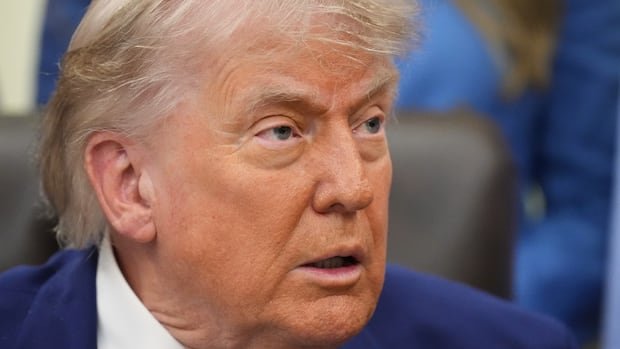

President Donald Trump of the United States has acknowledged the financial strain felt by many Americans due to the rising gas prices. However, his proposal to temporarily halt the federal fuel tax may not have the significant impact both he and drivers are expecting.
On Monday, Trump expressed his desire for a temporary suspension of the federal gas tax, a measure that would require approval from Congress.
The current federal tax on a gallon of gasoline in the U.S. stands at 18.4 cents, which is a small fraction of the national average pump price of $4.52 US per gallon, as reported by travel services agency AAA.
Since the U.S.-Israel conflict with Iran began at the end of February, the national average gas price has surged by 50%, translating to a $1.54 US increase per gallon over just 10 weeks.
Even Trump has acknowledged that cutting the tax would have a minimal impact on reducing prices. He mentioned on Monday, “It’s a small percentage, but it’s, you know, it’s still money.”
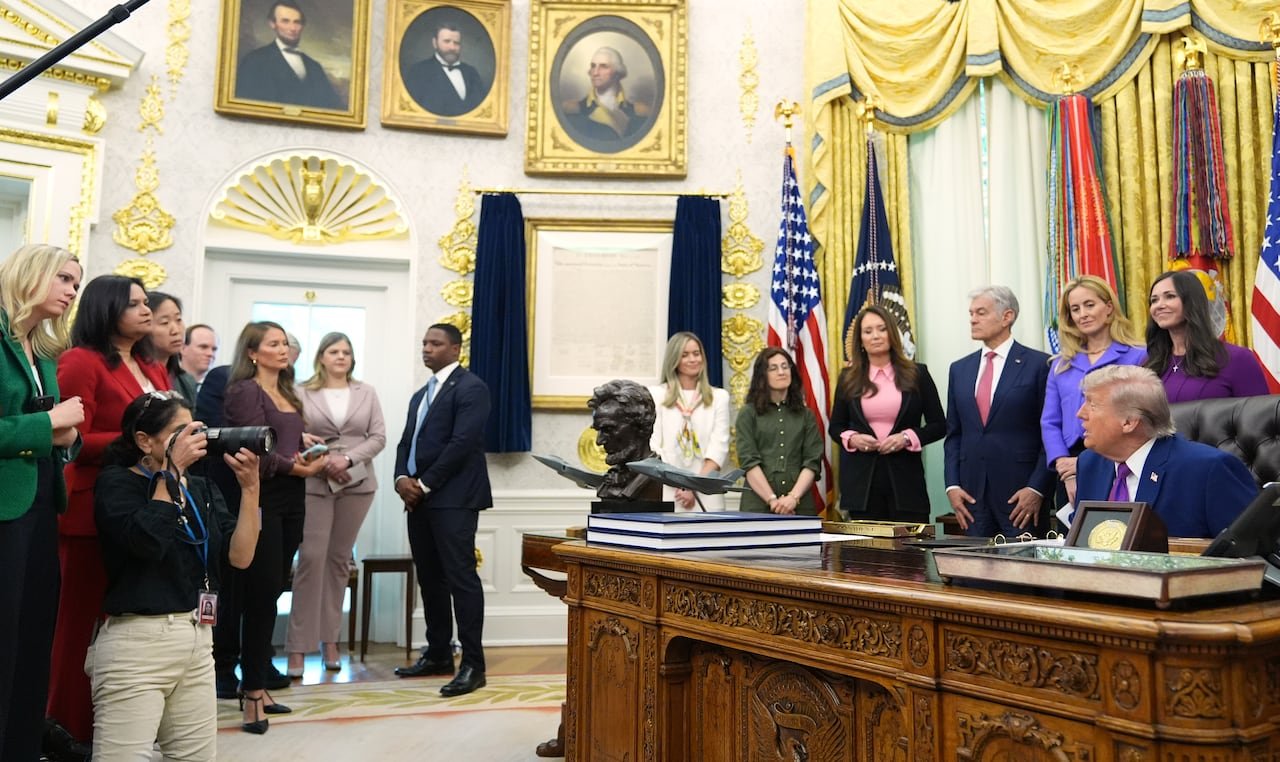
With the increase in gas prices, Trump’s approval ratings have declined. As the midterm elections approach, the White House is under pressure to address the issue of inflation as it may impact the Republicans’ control of Congress during the latter part of Trump’s term.
Recent polling conducted by Ipsos Public Affairs for Reuters revealed that over three-quarters of respondents hold Trump accountable for the surge in gas prices.
Public Concerns Regarding Economy Revealed Through Polls
Alec Tyson, the lead pollster for Ipsos based in Washington, emphasized that the rising prices are influencing public perception of the president. He stated, “It’s seen as a consequence of the conflict in Iran, which was a step or an action that the administration chose to take, and in that sense, Americans are saying the Trump administration bears responsibility.”
Tyson pointed out that while suspending the gas tax is generally favored, it may not significantly improve the president’s standing on economic issues or cost of living, which are areas of broad concern among Americans currently.

The Ipsos poll, which surveyed a nationally representative sample of 4,557 U.S. adults, including 3,577 registered voters, revealed public sentiments. The poll, conducted from April 15 to 20, was adjusted for demographics and political party identification.
When questioned at a service station in Washington, D.C., Oz Mangrum, a hotel manager, attributed the high gas prices to the president, but remained optimistic about a potential solution to the issue.
Mangrum shared his concerns about the escalating costs of refueling, considering drastic measures such as switching to a bicycle due to the financial burden.
Following Trump’s call to suspend the gas tax, two Republican lawmakers, one from the House and one from the Senate, announced plans to introduce bills to enact this proposal.
Responding to inquiries about the duration of the tax pause, Trump stated, “Until it’s appropriate.”
A temporary suspension of the gas tax would result in a monthly cost of approximately $3.5 billion to the U.S. Treasury, according to the Committee for a Responsible Federal Budget, a non-profit policy analysis organization.
The federal tax rates of 18.