


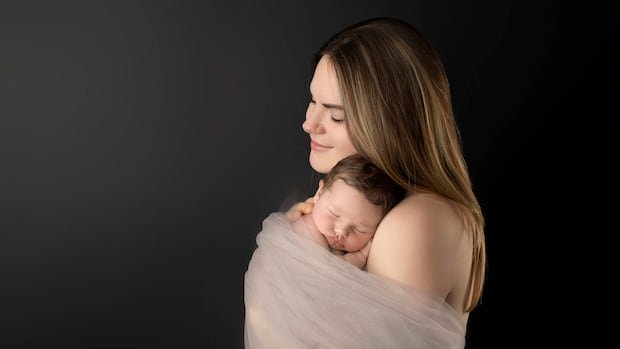

Bethany Oeming, a resident of Calgary, has a unique story that often sparks conversations about her physique. Throughout her life, she has encountered inquiries and remarks about her muscular build, with many assuming it results from strict exercise routines or diets. However, the reality behind her physique is not rooted in discipline or athleticism but in a rare condition known as familial partial lipodystrophy (FPLD).
The revelation of her diagnosis came at the age of 36 while pregnant with her second child, during a routine day at the hospital where she works as an anesthesiologist. A passing mention of the challenges involved in surgery for lipodystrophy patients piqued her curiosity, leading her to research the term later that day. To her surprise, the descriptions she found online perfectly matched her own body.
Driven by a natural inclination as a physician, she delved into extensive online research before reaching out to a prominent Canadian expert in the field. Subsequent genetic testing confirmed that she carried the R482Q mutation in the LMNA gene, debunking her long-standing belief in her natural athleticism and revealing the underlying medical condition she had unknowingly lived with.
Familial partial lipodystrophy, an ultra-rare disorder with an estimated prevalence of 2.84 cases per million individuals, manifests in various subtypes and presentations, contributing to widespread misunderstanding. In Bethany’s case, the condition led to a loss of subcutaneous fat in her limbs during puberty, creating a muscular appearance while fat accumulation occurred in other body areas. The internal impacts are more severe, including a heightened risk of insulin resistance, diabetes, premature heart disease, and abnormal cholesterol levels, necessitating vigilant monitoring, medications, and lifestyle adjustments to mitigate cardiovascular complications.
The diagnosis not only reshaped her understanding of her body but also prompted a reevaluation of her identity, challenging her long-held belief in her inherent athleticism. The contrast between her perceived strength and the reality of her medical condition left her grappling with a mix of relief, shame for overlooking the signs, and gratitude for finally having a name for her uniqueness.
Receiving this diagnosis during pregnancy stirred up uncertainties about hereditary implications, potential health challenges for her children, and the realization that her genetic legacy extended beyond herself. Reflecting on her past experiences and struggles with body image, the diagnosis shed light on her journey towards self-acceptance and understanding of her body.
Despite the emotional turmoil, the experience has deepened her empathy as a physician, enabling her to connect more profoundly with her patients and recognize the complexities of body-related comments and societal perceptions of health. Bethany’s newfound perspective has also heightened her awareness of privilege in accessing timely diagnosis and care, contrasting with the prolonged struggles many individuals with rare diseases face.
In the face of misconceptions and misinterpretations of her physique, Bethany has come to embrace her body as a testament to resilience, genetic intricacies, and the essence of her true story. Her strength transcends physical appearance, resonating in her roles as a healthcare provider, a mother, and a resilient individual navigating life’s uncertainties with grace and determination.