


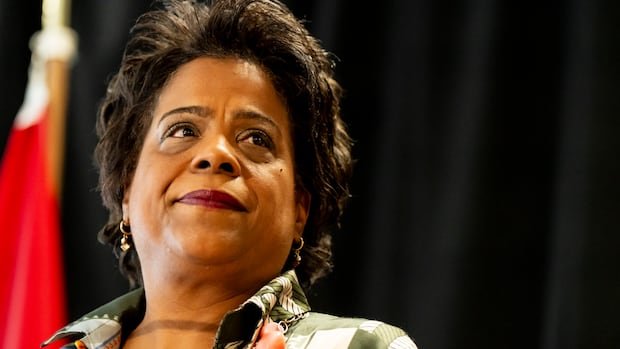

Health Minister Marjorie Michel expressed concerns over recent decisions made by U.S. public health agencies, such as the withdrawal of the universal recommendation for American infants to receive the hepatitis B vaccine, fearing potential negative impacts on Canadians’ health. In an interview on CBC’s The House, Michel emphasized the importance of aligning vaccination strategies with provinces and territories to ensure consistency.
The U.S. Centers for Disease Control and Prevention (CDC) recently voted to eliminate the longstanding universal vaccination recommendation for hepatitis B in American infants, though the directive for babies born to hepatitis B-positive mothers remains unchanged. The panel behind this decision was handpicked by Health and Human Services Secretary Robert F. Kennedy Jr., known for endorsing discredited claims linking vaccines to autism.
Michel highlighted the risk posed by adopting misinformation propagated by certain individuals, stressing the need to instill trust in scientific evidence among Canadians. She remarked on the evolving relationship between Canada and the U.S., emphasizing the importance of maintaining a united front on public health matters.
Furthermore, Canada lost its measles elimination status as cases surged nationwide, with Ontario and Alberta reporting the highest numbers. Michel disclosed efforts by the Public Health Agency of Canada (PHAC) to educate the public and address the ongoing measles outbreak in collaboration with local organizations.
Regarding Alberta’s move to expand private healthcare, Michel stated that federal authorities are assessing its compliance with the Canada Health Act, which governs the country’s publicly funded healthcare system. She underlined the federal government’s commitment to upholding national healthcare standards and hinted at repercussions for provinces deviating from the Act.
In a bid to alleviate strain on public health systems, provinces like Alberta and Ontario are considering expanding private healthcare options for procedures like hip and knee replacements. Ontario recently unveiled plans to invest $125 million in community clinics for orthopedic surgeries, following successful private-public partnerships in cataract procedures and diagnostic imaging services.