



The Alberta Teachers’ Association has indicated its intention to contest the provincial government’s Back to School Act through all available legal channels. The government swiftly passed the bill on Tuesday, mere hours following its introduction in the legislature. This move compelled 51,000 teachers to resume work on Wednesday under a new four-year contract that had been rejected by 90% of teachers in a prior vote.
Under the Back to School Act, the notwithstanding clause has been invoked preemptively, inhibiting the ATA from engaging in bargaining or striking until September 2028 and preventing the law from being overturned by a court in the event of a successful Charter challenge.
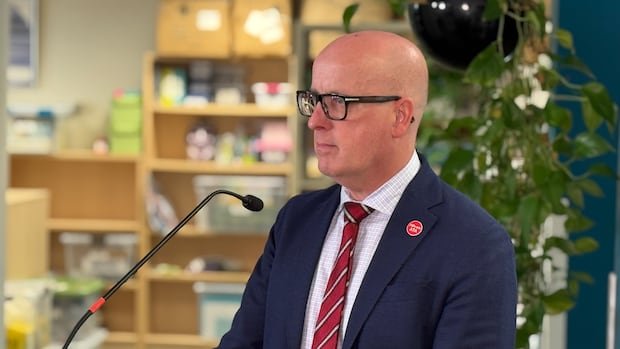
ATA President Jason Schilling stated during a press conference in Edmonton that while teachers will comply with the law, their compliance does not equate to consent. He emphasized the association’s firm commitment to combat what they view as an abuse of power using all available legal means and unwavering dedication.
A legal team is currently evaluating the ATA’s options to challenge the legislation, which was officially enacted on Tuesday. The Act enables the government to contravene rights outlined in the Canadian Charter of Rights and Freedoms, the Alberta Bill of Rights, and the Alberta Human Rights Act.
Various human rights organizations have condemned the Alberta government for impeding teachers’ collective bargaining rights. Amnesty International Canada criticized the violation of teachers’ right to strike, freedom of expression, freedom of association, and right to peaceful assembly. Additionally, the Canadian Civil Liberties Association labeled the legislation as a perilous misuse of authority.
Labour organizations such as the Alberta Union of Provincial Employees, the Canadian Labour Congress, and Unifor have also criticized the Act, raising concerns about jeopardizing workers’ rights. Alberta labor leaders are set to announce a unified response in Edmonton on Wednesday afternoon.
The government ministers defended their actions as essential to restore normalcy in schools after teachers initiated a strike on October 6, causing school closures. They argued that balancing teachers’ right to strike with students’ right to education necessitated government intervention. Education Minister Demetrios Nicolaides pledged to allocate an additional $100 million annually over the next three years to hire more educational assistants and expedite testing for students with potential learning challenges.
Moreover, the government committed to creating an education task force to tackle issues related to large class sizes and students with complex needs. Nicolaides also promised to reinstate the collection of class size and complexity data from school divisions, a practice halted by the UCP government in 2019.
The Opposition has raised concerns over the sufficiency of the government’s funding pledges to address longstanding issues in public education and questioned the impact of suspending teachers’ bargaining rights. The ATA has echoed these sentiments, emphasizing the inadequacy of the government’s response to address the systemic underfunding of public education.