


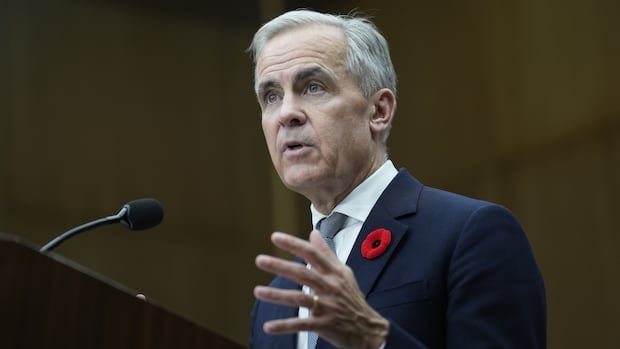

The Canadian government is set to unveil adjustments to its immigration plan in the upcoming budget announcement, responding to evolving public sentiments towards immigration and recent reductions in immigration targets. Prime Minister Mark Carney emphasized the need to align immigration levels with national requirements during a speech at the University of Ottawa. Following a surge in immigration levels amid post-pandemic labor shortages, the Trudeau administration decided to scale back the number of permanent residents from 500,000 to 395,000 in 2024, with further reductions planned for subsequent years. Simultaneously, the cap on international student permits was decreased by 10%.
A significant shift in public opinion on immigration was observed for the first time since 1996, with a majority of Canadians expressing concerns about the influx of immigrants into the country. Usha George, a professor at Toronto Metropolitan University, highlighted the strain on public services due to the sudden rise in immigration post-pandemic. The recent unemployment rate in Canada stood at 7.1%, with new immigrants experiencing a higher rate of 11.1% compared to Canadian-born individuals. Statistics indicate that immigrants are more likely to work in fields unrelated to their education or training.
The government’s adjustment in standards for economic immigrants has raised questions, with concerns about admitting individuals who may not meet the previous criteria. However, the business community advocates for attracting high-skilled labor to support emerging industries. Industry leaders stress the importance of precision-based immigration pathways focusing on key national technology sectors.
Recent changes in U.S. visa policies have prompted discussions in Canada about capitalizing on attracting specialized talent. The introduction of a $100,000 fee for H-1B visas by the Trump administration has led to potential opportunities for Canada to lure skilled workers back to the country. However, challenges such as delays, complexity in the immigration system, lower salaries, and expensive housing pose obstacles to the tech sector’s talent attraction efforts.
Amidst calls to leverage the evolving U.S. visa policy changes, experts advise caution in altering immigration policies solely based on external factors. It is essential to align immigration strategies with domestic labor market demands rather than reacting to external policy shifts.