


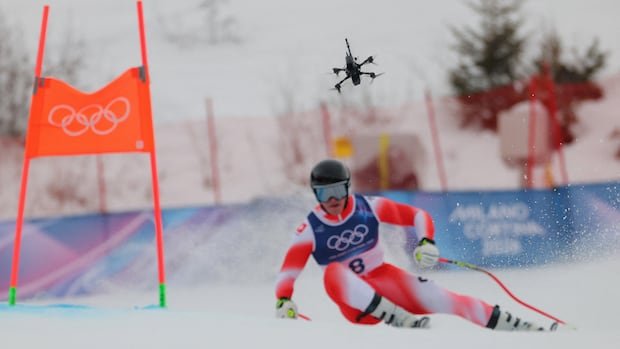

At the freeski slopestyle competition, Canadian athlete Megan Oldham secured an Olympic bronze medal on her final run, accompanied closely by a drone providing a unique perspective to viewers. These first-person view (FPV) drones, a new addition to the Olympics since their introduction in Sochi in 2014, offer dynamic coverage, matching the athletes’ movements on the slopes, jumps, and ice.
Operated by skilled pilots using headsets and controllers, the drones have been a highlight of the Winter Games, reaching speeds of up to 75 km/h to track downhill skiers and navigate intricate luge tracks. The intricate drone coverage has required significant expertise and practice, with pilots dedicating hours to mastering the art of capturing athletes in action.
While the immersive drone shots have garnered praise for bringing audiences closer to the athletes, some criticisms have emerged, notably concerning the noise generated by the drones. Athletes have expressed mixed reactions to the drones, with some appreciating the innovative footage while others find the close-up shots distracting during their performances.
Despite the mixed reception, IOC’s Pierre Ducrey recognizes the value that drones bring to the Olympic experience, acknowledging that integrating this technology into sports coverage is a positive evolution that may require some adjustment from viewers. The buzz surrounding the drone coverage at the Winter Games signifies a shift towards more engaging and immersive sports broadcasting.